Featured post

Hello and welcome!

The time has come! - Since 01 March 2021 we are accredited with Erasmus+. This means that we can benefit from a very far-reaching funding program of the EU, which offers us completely new opportunities and ways of learning and teaching.

Erasmus+ aims to enrich lives and create openness to other(s) and is therefore a great fit for us: we too are characterized by openness, a diverse, engaged school community and a desire to promote values and strengths.

The slogan of the Erasmus+ program is "Enriching lives, opening minds" and we think that fits really well with our school: We feel diversity is an enrichment - we would like to expand this even further with Erasmus+.

SVeN 2025

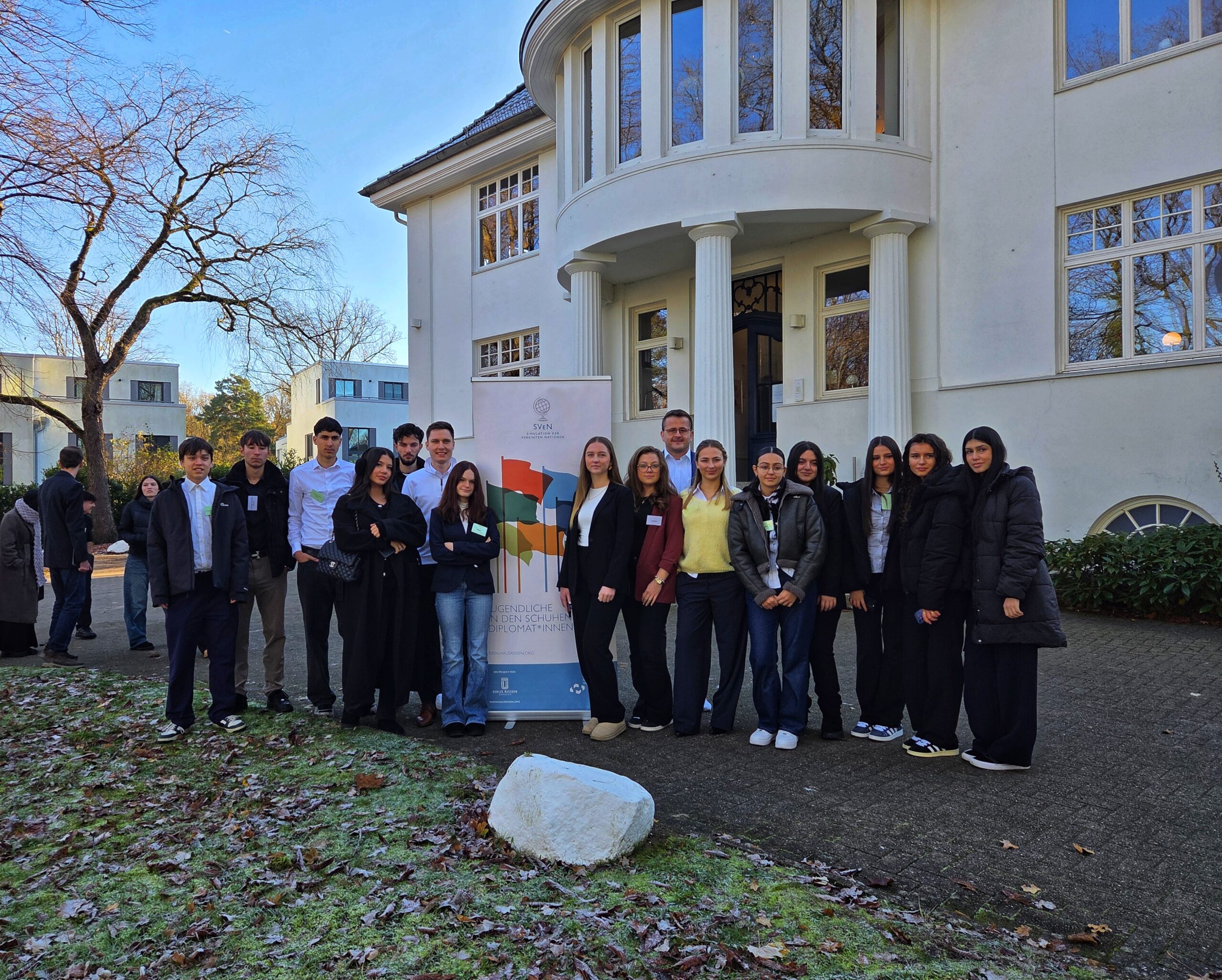
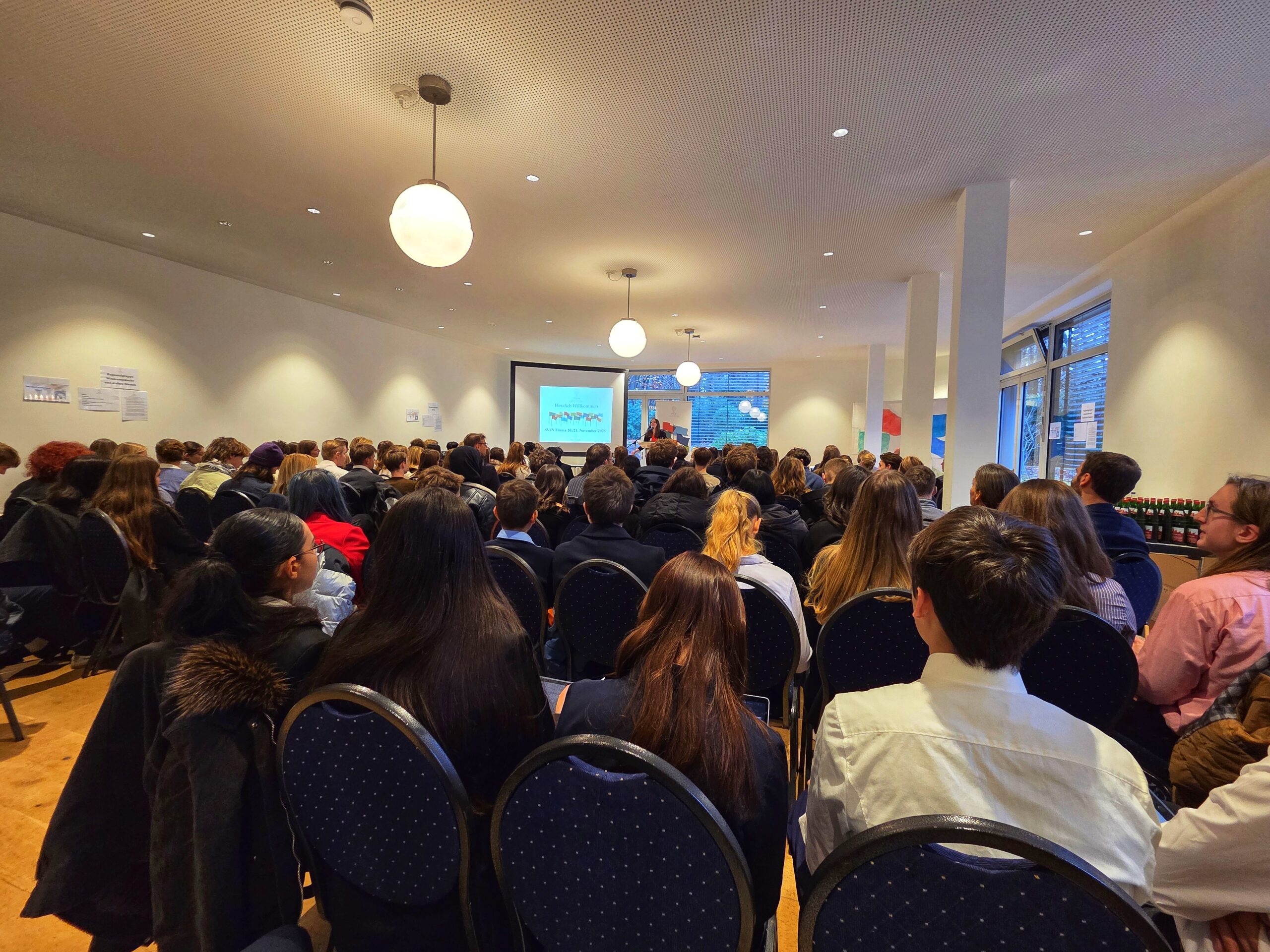
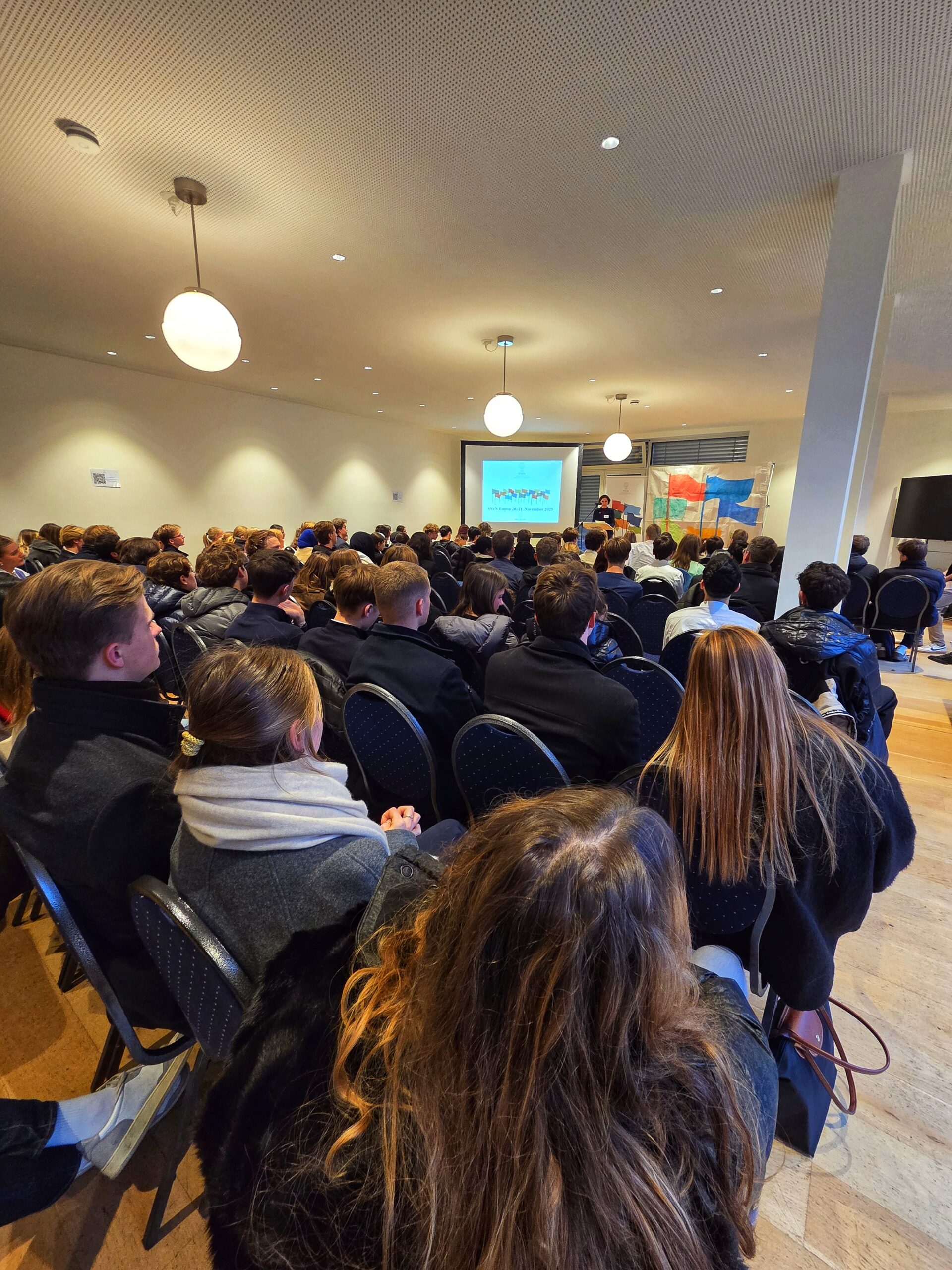
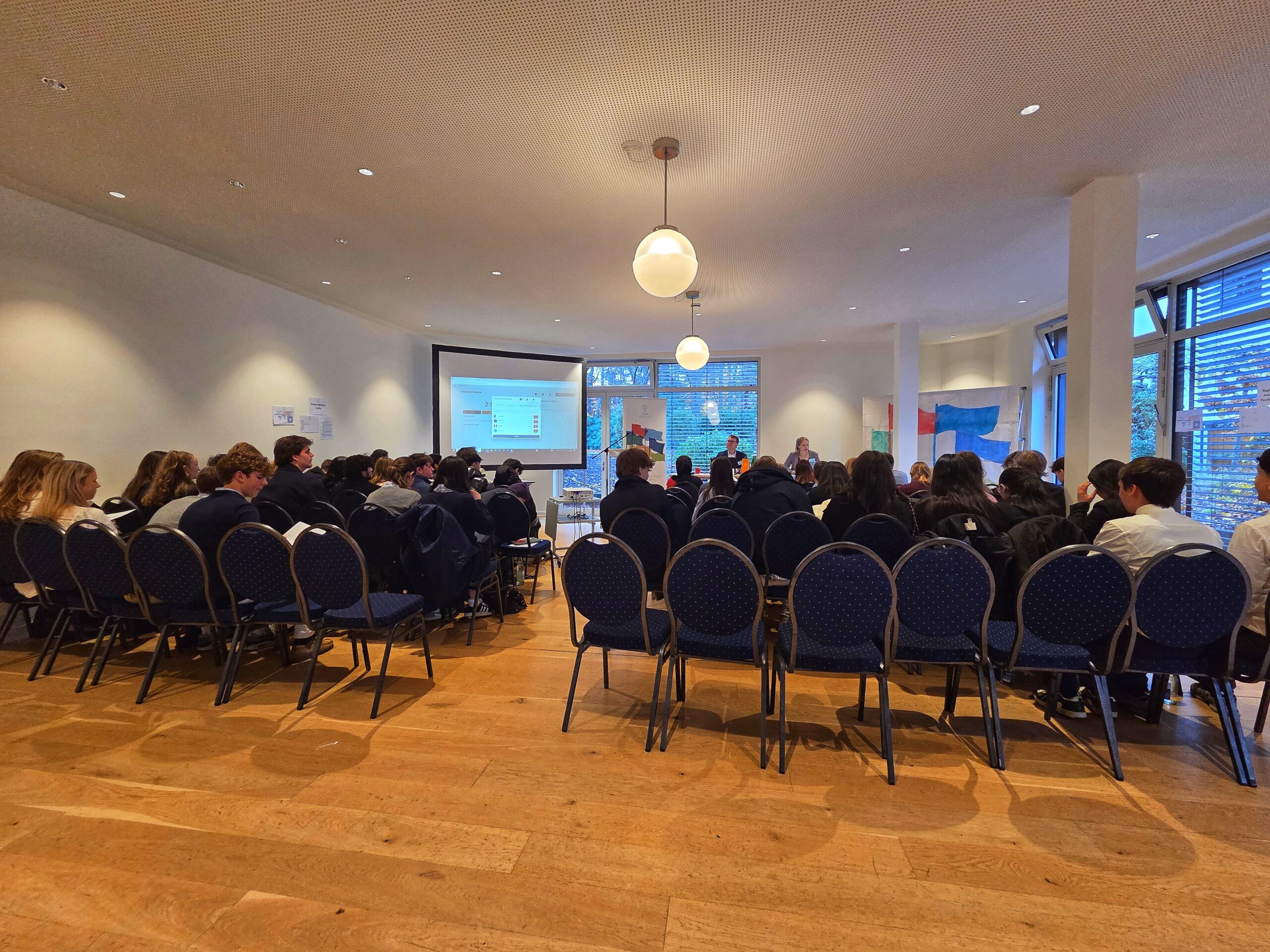
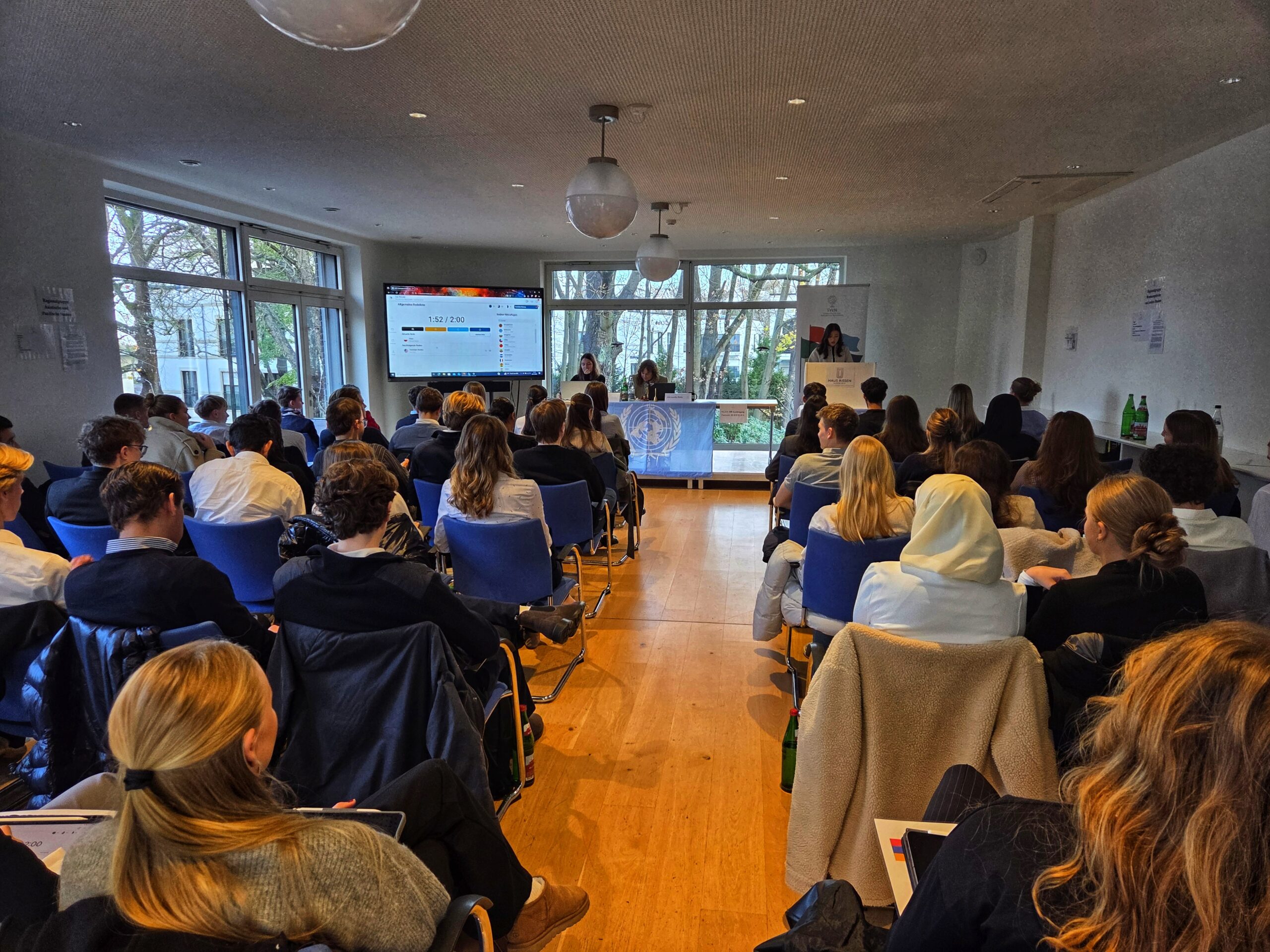
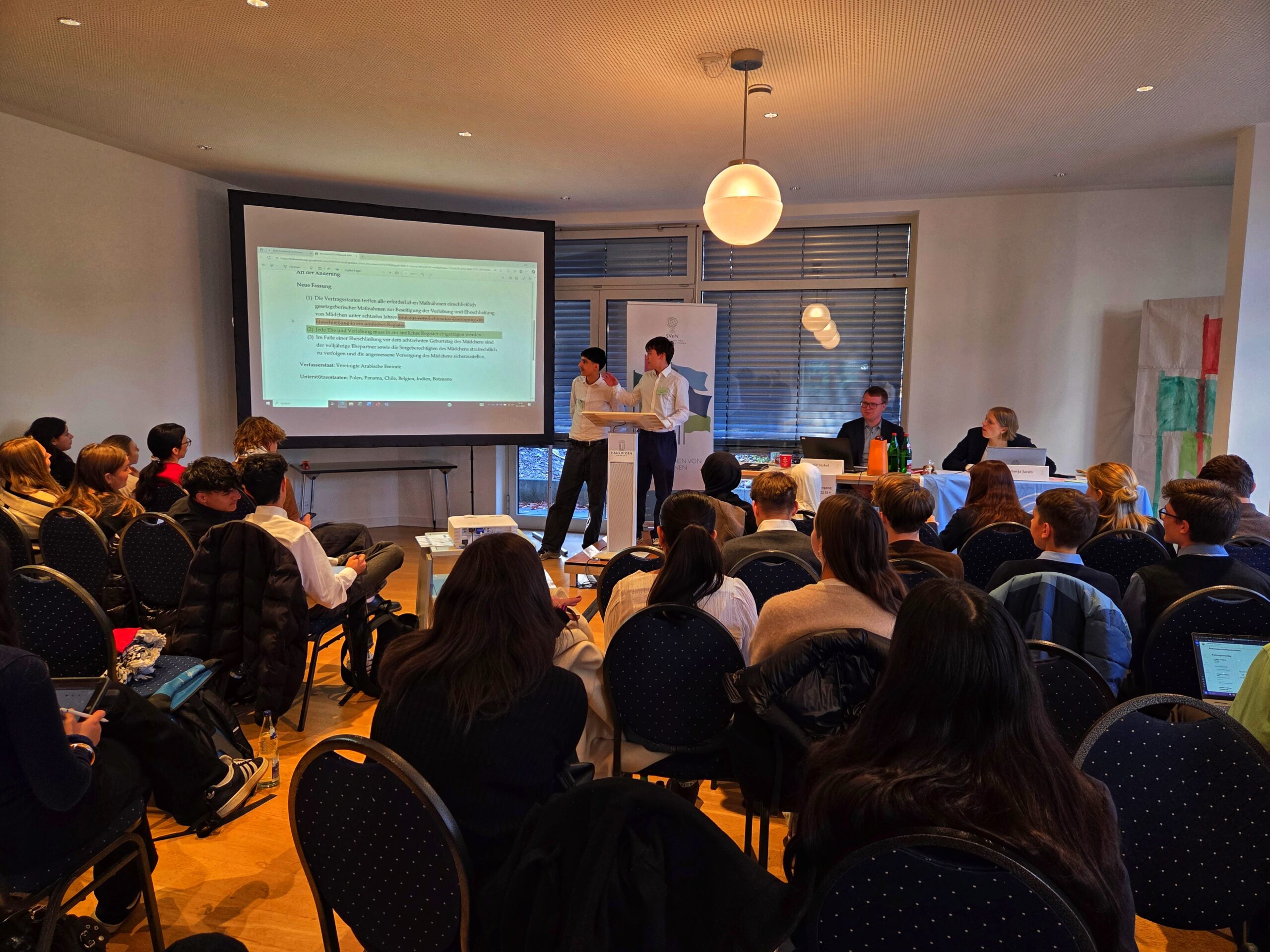
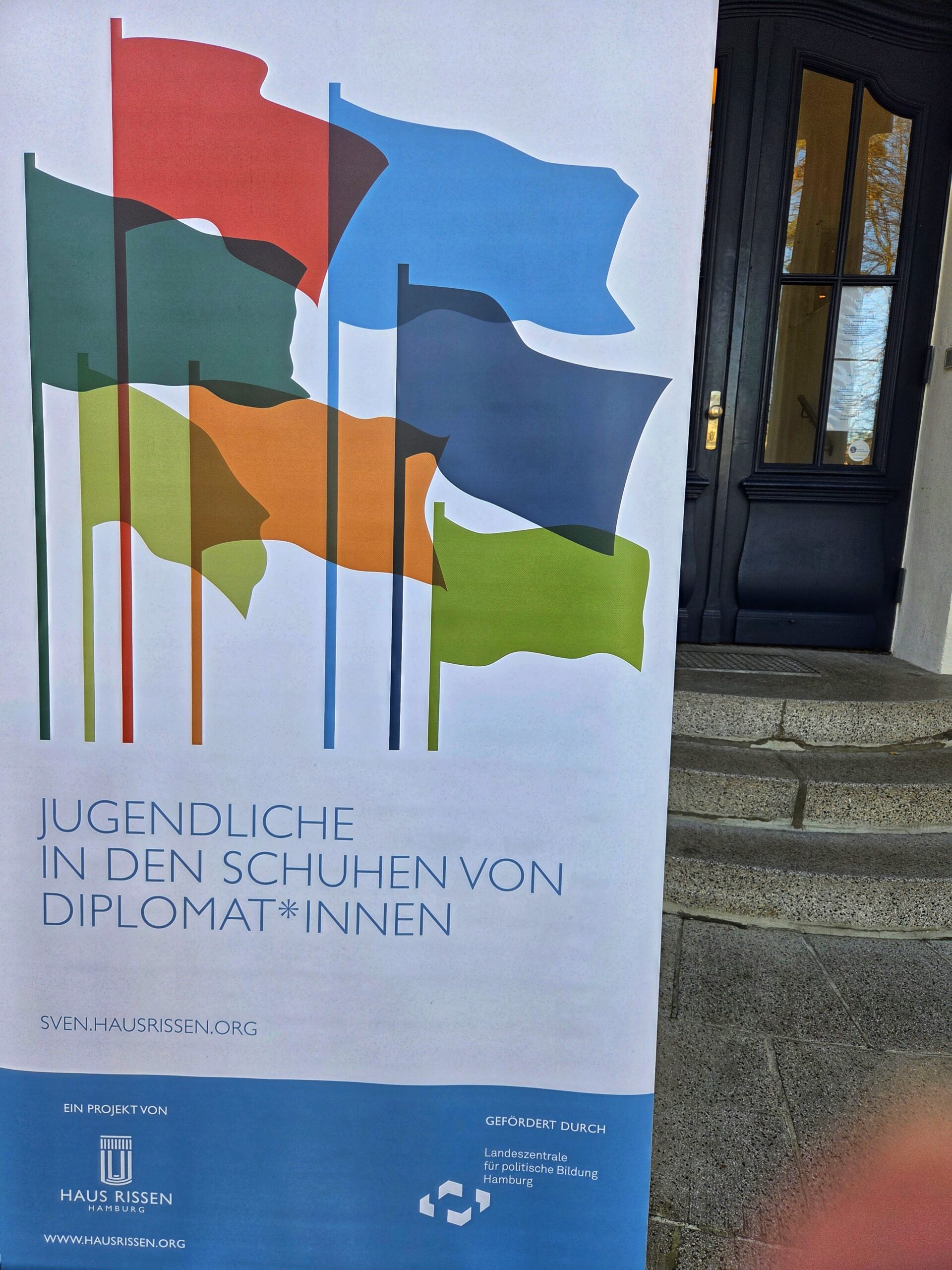
Between crises and compromises – our students at the SVeN at Haus Rissen. On 20 and 21 November, it was that time again: a team of dedicated students from our school, accompanied by our teachers Maximillian von Holten and Michael Schmitt, once again took part in the SVeN – Simulation of the United Nations at Haus Rissen in Hamburg. For many, it was not just a simulation game, but a journey into new political worlds – with heated debates, unexpected alliances and a good dose of emotion.

What exactly is SVeN? SVeN stands for Simulation of the United Nations. It is run by HAUS RISSEN, an independent political education institute in Hamburg. Young people aged 15 and above are invited to take on the roles of UN delegates and simulate real UN bodies – specifically the Human Rights Council and the Economic and Social Council.
The project is financed entirely by donations and third-party funds, so participation is free of charge for the students. SVeN is led by a highly professional team that works with realistic rules of procedure based on the actual rules of procedure of the United Nations.

Preparation and procedure. Our group prepared intensively in the days leading up to the simulation – with position papers, negotiation strategies and speeches. On the simulation days themselves, the delegates negotiated issues relating to children's rights, such as girls' rights and compulsory education – just as they would at real UN conferences.

‘In a very short time, my self-confidence has grown enormously thanks to my role as a delegate.’ – This is how one student aptly summed up her experience.

‘You learn how democracy happens not only in the classroom, but also internationally – it gave me goosebumps.’ – A quote that shows the emotional depth of the simulation.

‘It was incredible to see how our delegations built a coalition – in the end, they had formulated genuine compromises that they could be proud of. For me, SVeN is an absolute highlight of the school year – this kind of learning cannot be replaced by mere lectures.’

The participants are overwhelmingly enthusiastic: engaging with other perspectives, strategic negotiation and creative approaches to complex issues not only promote political knowledge, but also personal development. The above quotes show that SVeN inspires, encourages and challenges!

A look at the big picture. The value of the project is also demonstrated by the external support it receives: SVeN is under the patronage of Katharina Fegebank, the Deputy Mayor of Hamburg. And the political and educational benefits are also enormous: according to the State Agency for Political Education, SVeN strengthens democratic skills such as communication, compromise and self-efficacy.

A rich conclusion – with humour and heart. The simulation is much more than a role-playing game: for our students, it was an emotional rollercoaster ride. Between heated debates about girls' rights, motions, speaking breaks and unexpected alliances, they not only learned to formulate arguments – they learned to listen, build bridges and take responsibility.

And by the way: some of us enjoyed the negotiations so much that they joked, ‘Becoming a diplomat is cool – but please let's not have to pass resolutions all the time!’

For our school community, one thing is certain: SVeN is a great opportunity – and we are already looking forward to the next round!

BSO internship meets Erasmus+!

04.11.2025. More and more students are taking advantage of the opportunity to gain their first professional experience not only in Germany, but also in other European countries. Two students from our upper school completed their BSO internship in Europe during the autumn holidays – and in doing so, they not only got to know new working environments, but also new perspectives, new people and new routines outside their own comfort zone.

These personal accounts impressively demonstrate what mobility within the framework of Erasmus+ can mean for young people: independence, confidence in their own abilities – and the feeling that Europe can really be experienced. We are delighted to be able to share these individual impressions here!

"I did my internship at a primary school in France. My exchange partner had already visited me in February and also went to school with me. Now I was staying with her.

She lives an hour away from Paris, where I went to school with her father. At first, I had some difficulty communicating because I hadn't spoken French for a long time, but by the end of the week it was actually going quite well.

At school, I helped the children with their schoolwork. In French class, it was quite difficult for me to help the children because I lacked some vocabulary and the corresponding grammar. But in maths, English and the other subjects, it worked quite well.

The children were nice and understood that I don't speak French perfectly. Once, I didn't understand a girl, so she tried to explain in English. She only managed a few words, but I thought it was sweet that she tried.

What particularly surprised me was that lessons at the primary school I attended lasted until 4:30 p.m. In return, the children have every Wednesday off school.

When my exchange partner finished school, we sometimes did things together."

"I completed my two-week internship at a tourist office in Cherbourg, France. Most of the time, I helped local people from Cherbourg, but also tourists who had travelled there, and entered their country of origin into a programme.

Most of the time, they asked about possible activities in the city or monuments, but also in other regions in Cotentin. The office had lots of different free brochures in French, English and German, so my German skills were also very helpful. I handed these out on request and mainly helped English- or German-speaking tourists and provided them with information about the city.

I was also able to communicate in French for questions that weren't too specific and had the support of my colleagues when necessary. I was able to learn many new French expressions that you don't learn in class.

I helped sell local products and souvenirs at the cash register, but also restocked the shelves. When I talked to my colleagues, we also came to the conclusion that German tourists always leave the office door open when they come in. To my surprise, this cliché actually turned out to be true.

What I particularly took away from this experience is that work in a tourist office is very seasonal, but nevertheless very varied due to the different wishes of tourists/customers."

"My arrival in Schlierbach was marked by a mild dose of educational realism: I travelled one stop too far and ended up at a neighbouring point on the map. Fortunately, the distance was less than ten kilometres, so a few minutes later I was picked up by car and taken directly to my destination. The community is small, and getting lost there is only possible out of academic curiosity or after venturing too deep into the surrounding forests.

The school day was organised with almost mathematical precision. The start of lessons at 7:54 seemed like a subtle attack on circadian rhythms and the strict 8:00, while the end of lessons at 15:26 revealed a subtle sympathy for structured time chaos. At least the workload is distributed in such a way that no one has to stay until late afternoon; the school closes at 3:30 p.m. The 45-minute lessons were particularly striking: after the hour-and-a-half German blocks, they seemed like short bursts of energy. Nevertheless, the pace of work remained high, and contrary to my expectations, I got used to this unusual rhythm. Particularly noteworthy are the six hours per week dedicated to independent learning.

This concept seemed to be a well-thought-out way of offering pupils of all ages space for relaxation and self-organisation, rather than leaving them to sit around during long breaks. The workshops on offer ranged from chess and meditation to electronics soldering and dog walking. The range of activities was more reminiscent of a university elective fair than a traditional school. The school's infrastructure created an impressive contrast that could easily be included in cultural studies textbooks. The complex consists of two parts: a historic monastery building and a modern new building that almost looks like a carefully polished fragment of the future. The transition between the two areas felt like a brief leap in time between a quiet past and a precisely constructed tomorrow.

Overall, the time in Austria proved to be intense and demanding. Five-minute breaks left little room to catch one's breath, and the architecture of the old school wing made finding the classroom on time a minor navigation test. The placement of classes such as 8B next to 2A defied all intuitive logic. It easily took two minutes to find the right room on the map. The school system combined discipline, room for independence, excellent facilities and a remarkably high proportion of theology, which seemed as unfamiliar to someone without prior experience as political debates do to us."

Visit from Funchal

October 7, 2025. Review – Outlook. Visitors from Funchal – Madeira – Portugal (April 21, 2025 to April 26, 2025)

“Bremerhaven is a fantastic city!” Together with our Erasmus+ guests from Funchal – Madeira, we explore the sights and attractions of Bremerhaven. Of course, the Emigration Center and the Climate House are perceived as inviting destinations, but the tour of the city allows us locals to see the city through different eyes. “The Bürgerpark is a place where you can go jogging safely day and night,” reveals our colleague and sports teacher Cristina, who has run in many places around the world. Her list of countries she has visited is more than 26 lines long.

We take photos in front of the large Bürgermeister-Smidt-Gedächtniskirche. We walk around until our feet hurt and discuss the best shops in the city center. Afterwards, the students go to their host families, who are praised by everyone in the evaluation with gratitude and enthusiasm. Everyone involved is already looking forward to seeing each other again in November 2025, when the students from the three participating schools in Bremerhaven will set off on a return visit to Madeira. These are the CvO Oberschule, the Oberschule Heinrich Heine, and the Europaschule CvO GyO.

We would like to thank our guests for their openness, humor, and appreciation! We would like to thank CvO Oberschule and Heinrich-Heine for giving us an insight into everyday school life while our profile course exams were being held. We would like to thank everyone involved for their fantastic cooperation! We would like to thank our wonderful host families and students for the great activities we did together in the afternoons. The Bremerhaven Zoo and even the Easter Meadow in Bremen were on the program. A thousand thanks for your willingness to think about school again during the Easter holidays and for showing true hospitality.

Welcoming and hosting guests is an inspiring experience – so are you interested in becoming a host? Get in touch with our school's Erasmus+ team (SMT, EHT, HOF)! And be sure to take part in the exchange.

See you in the first week of November in Funchal on Madeira!
“Schule:Global” Network Meeting

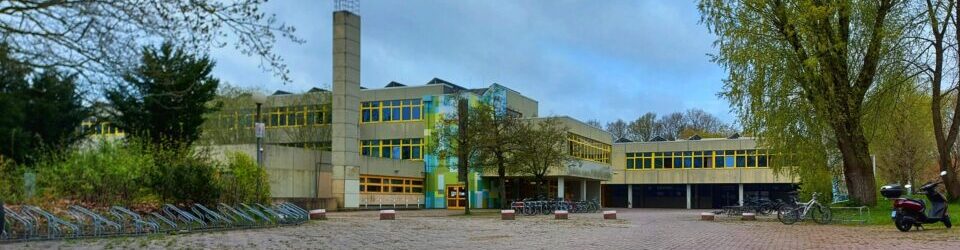
September 26, 2025. Yesterday and today, we attended the Schule:Global network meeting in Frankfurt am Main - together with dedicated teachers from all over Germany. The focus was on a question that is becoming increasingly important in times of diversity and globalization: How can we confidently and constructively shape intercultural situations in everyday school life?

Between input on “role, attitude & inner map,” workshops on conflict mediation, multilingualism, and resilience (teachers need this!), and inspiring practical examples such as the “Weltweit-AG” (worldwide working group), the “Kulturpause” (culture break), and scrapbooks, we discussed, laughed, and learned diligently.

Conclusion: Diversity in schools is an opportunity - if we approach it with courage and creativity!

Partner schools visiting!

19.08.2025. Today was a special day: we welcomed two representatives from our partner schools.

Anna Nowakowska from Krakow (Poland) is staying with us for a whole week. As part of a job shadowing program, she is accompanying lessons and getting to know our everyday school life up close.

We also had a visit from Miri Schmidt from our partner school in Schlierbach (Austria) – and she brought some animal support with her: her school dog, who immediately won the hearts of many students.

Encounters like these show how vibrant our school partnerships are. As stated in our joint certificates, they stand for tolerance, human dignity, mutual understanding, and peaceful coexistence in Europe.

EUROPEAN SCHOOL!

June 12, 2025. - A special day at Bremen City Hall! - Today the time had finally come: together with pupils, parents' representatives, colleagues and our school management, we were able to receive our European School certificate at a celebratory event in Bremen Town Hall!

What began in March with the visit of the expert commission has now come to a crowning conclusion. Our commitment to European values, international cooperation, intercultural learning and lively school partnerships has been recognized - and that fills us with great pride!

A big thank you to our European School Representative, Dr. Angela Hoffmann, who has always kept an overview and pulled all the strings - as well as to all those who have contributed over the past years to our school being able to follow this path today - through projects, exchange programs, teaching concepts and personal commitment. This would not have been possible without you!

Particularly impressive was the festive setting with great presentations by the other award-winning Bremen schools: Gymnasium Horn, Gerhard-Rohlfs-Oberschule, Altes Gymnasium and Helmut Schmidt Schule.
Congratulations to all of you on your (re-)certification as a European School! Together we are bringing Europe to life in our schools!

School partnership with Krakow

As part of the third joint project week in Krakow, the upper secondary school of the Carl von Ossietzky Gymnasium Bremerhaven concluded an official school partnership with the Zespół Szkół Elektrycznych nr 1 (ZSEL1) in Krakow, Poland. The partnership agreement was signed during the exchange, which took place from 26 to 31 May 2025 as part of the Erasmus+ program.
The aim of this cooperation is to promote the values of tolerance, human dignity and mutual understanding and to work together on European projects. The partnership creates space for a lively, intercultural exchange between pupils and teachers from both schools and stands for a peaceful and democratic Europe.
We are very much looking forward to working with our Polish friends in the future and look back with gratitude on the three encounters so far, during which we have always greatly appreciated the warm hospitality of our partner school. - We look forward to many exciting projects in the future!

Further impressions of the current project week at:
🔗 https://erasmus.cvo-gyo.de/en/2025/05/31/greetings-from-krakow/

Impressions of previous project weeks at:
🔗 https://erasmus.cvo-gyo.de/en/our-projects/learning-from-the-past-for-the-future/
🔗 https://erasmus.cvo-gyo.de/en/our-projects/2400-2/

Greetings from Krakow!

Five days, two nations, one message. As part of our Erasmus+ project “Together against racism and anti-Semitism”, a group of our students traveled to Krakow from 25 to 31 May 2025 - and returned with many new impressions, moving experiences and a clear message: NEVER AGAIN is now!
The very first day showed that this is not just about theory, but about real encounters. Language speed dating quickly turned “strangers” into laughing friends - and language barriers into little adventures. In the first work phase, we dived straight in: What is racism? How do we encounter it in everyday life and what can we do about it - not just with words, but with attitude?
The second day brought discussions, insights - and pierogi. Between reflections on historical racial theory and current forms of discrimination, there was also time for a visit to the Jewish quarter of Kazimierz. And because Erasmus+ is sometimes a matter of luck: our teachers suddenly had dinner sponsored - thanks to Krakow burger advertising! But then came day 3.
Auschwitz-Birkenau. A place that changed everything. A day that none of us will forget. Our pupils encountered the horror of history in respectful silence. The images, the words, the silence - they remain. It was a day that deeply touched and connected us all. Never again - that is not just an empty phrase. It is a responsibility and a promise. And we will carry this promise forward. Together. Across borders. For a future without hate!
On the fourth day, we combined creativity with depth: German-Polish groups came up with project ideas on options for action against everyday racism, music as resistance and the question of how to make anti-Semitism visible - including on Instagram. The rally across the site of the former Plaszow concentration camp provided further impressive moments - and the subsequent walk up Krak Hill not only cleared our heads, but also blew a little piece of the North Sea through our hair (“Greetings from Bremerhaven!”).
The last day was a colorful mix of farewell, reflection and hope. A visit to the Oskar Schindler factory once again revealed stories that must not be forgotten: moving, impressive and a worthy conclusion to our educational trip. Afterwards: Bigos, souvenirs, last hugs - and a little melancholy.
Our conclusion: this week was more than just an exchange. It was a statement. A togetherness. A beginning. Because respect knows no boundaries - and commitment doesn't end when you go home! - Dziękujemy, Kraków. Thank you, Erasmus+. We'll see you again!

Water Unites – Student mobility to Thessaloniki

From March 30 to April 5, 2025, 14 students from the upper secondary school of the Carl-von-Ossietzky Schulzentrum Bremerhaven (CvO GyO) took part in an Erasmus+ group mobility in Thessaloniki, Greece, together with their teachers Dr. Angela Hoffmann, Daniel Ehlert, Marcus Siebs and Sabine Wieczorek. The “Water Unites” project focused on the ecological and social importance of water - and turned into an impressive week of European cooperation and personal development.

Research meets encounter. Together with students from the Second Lyceum of Kalamaria, the participants worked on scientific issues relating to water quality, climate change and sustainability. In an interdisciplinary workshop, they developed presentations, carried out measurements and reflected on the relevance of shared environmental responsibility. “It was exciting to see how similar our questions are - even though we come from different countries,” said Ana after the joint project work with Greek young people.

Micara added: “I would never have thought that an Arduino workshop could be so much fun - especially when you write the codes together with someone you didn't even know the day before.”

Experiencing Europe together. In addition to the technical work, the focus was on cultural exchange and experiencing Europe. During the Greek language lessons, the city rally through Thessaloniki and the visit to the EU workshop, it quickly became clear that Europe means more than borders and politics - it thrives on togetherness. “The Greek students welcomed us immediately. We laughed, learned and even discussed politics together. I have rarely felt Europe so directly,” Franziska reported. The joint garbage collection campaign on Kalamaria beach was particularly impressive for many: “It was nice to realize that environmental issues concern us all - no matter which country we come from,” said Lili.

Small anecdotes, big memories. In addition to scientific curiosity and European solidarity, there was no shortage of fun and adventure: whether it was the first flight (“Michelle still mourns the lost cheesecake on the plane”), getting lost in Thessaloniki's old town (“We just followed the cats - and actually arrived at the hotel”), or the hotly debated cookie test (“The cookie from Cookie Man was honestly the best of my life,” said Hülya) - this trip left lasting impressions.

One conclusion in many voices. Even if the technology didn't always work smoothly, the participants managed to find creative solutions - a strong sign of problem-solving skills and teamwork. “After five days of failed attempts, we were finally able to take measurements - I was just relieved,” said Leonie. And she put it in a nutshell: “I learned more about Europe in that week than in a whole school year.”

Conclusion: “Water Unites” - and so does Erasmus. “Water Unites” was not just the title of a project, but a European principle come to life. It showed how young people can learn together across national borders, take on responsibility and make friends - on an equal footing and with a view to a shared future.

Polish guests visit Bremerhaven!

03.04.2025. From 31 March to 3 April 2025, a special Erasmus+ project week took place at our school with students from the ZSE in Krakow, Poland. Under the title ‘Can We Build Up a European Eco Society?’, the participants focussed intensively on the challenges of climate change and the role of individuals and entire societies in the fight against environmental threats.
Exciting workshops and discussions were on the programme during the week. A particular focus was on sharing possible solutions for a more sustainable future in Europe. The students developed ideas for a more environmentally friendly society and actively addressed the question of how Europe can act together in a more ecologically sustainable way.
A highlight of the week was the very exciting presentation by Victor Smetacek on carbon capture strategies with algae moulds. Mr Smetacek, Professor Emeritus at the Alfred Wegener Institute, Helmholtz Centre for Polar and Marine Research (AWI), gave fascinating insights into his research work and discussed the potential of these technologies for climate protection with the participants.
In addition to the content-related work, there was also time to explore Bremerhaven. A special experience was the guided tour of the city by pupils from Bremerhaven, who showed their guests the sights and history of the city with great commitment. The programme also included a visit to the Klimahaus and a tour on the harbour bus.
The project week was an inspiring experience for everyone involved and raised awareness of ecological issues. We would like to thank our Polish friends for the enriching time and look forward to many more project weeks together!

Do zobaczenia w Krakowie w maju, przyjaciele! // See you in Krakow in May, friends! // Wir sehen uns in Krakau im Mai, Freunde! 🙂