Category Archives: General

Visitors from Athens

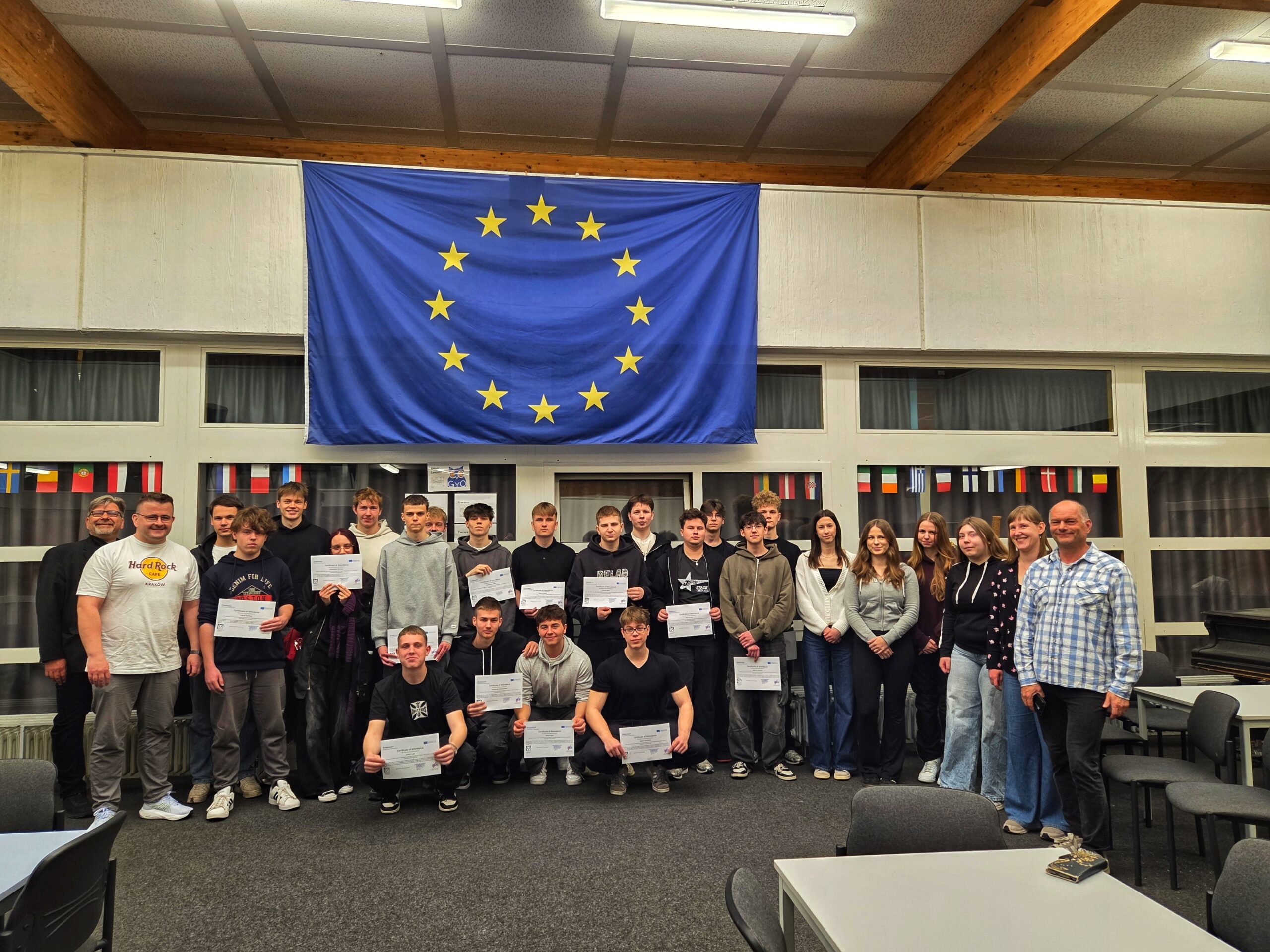
A week full of new encounters, exciting excursions and interesting conversations – that is how we will remember our Erasmus+ visit from the Third Gymnasium in Zografou (Athens). Together, we explored the topic of ‘Inclusion in Europe’ and, in doing so, learnt not only a great deal about our different cultures, but also about the values that unite us in Europe.
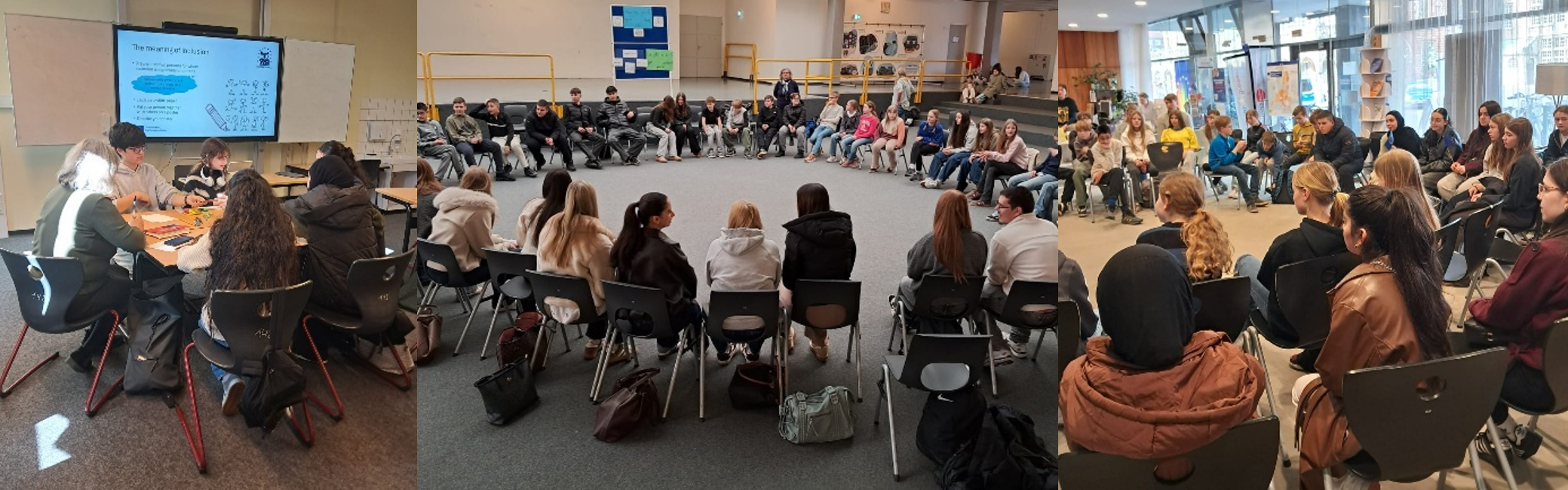
To prepare for the week, we met several times via Zoom. That was brilliant, because it meant that when we welcomed our guests to our school at the start of the week, it felt as though we’d known each other for ages. Together with many teachers, including some from Poland and Spain, we introduced each other to our everyday school life and our Erasmus+ projects. We really had plenty to talk about and learn. In a creative workshop, we pupils then shared our thoughts on what inclusion means to us and, during a city tour, explored our favourite spots in Bremerhaven together.
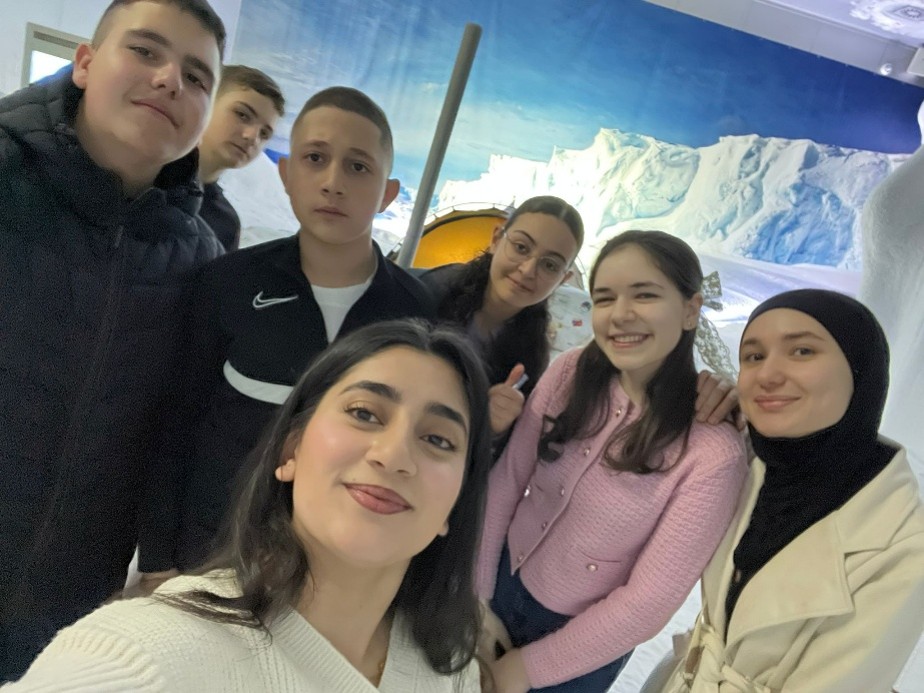
We really enjoyed our visit to the Klimahaus. On a journey along the eighth meridian, you experience different climate zones and learn how differently people live around the world. The joint lessons with the theme-based project classes (ToP classes) were also an enriching experience. Despite minor language barriers, we worked together successfully and learnt a great deal from one another.
At the German Emigration Centre, we explored the stories of people who were forced to leave their homelands. The exhibition prompted us to reflect on migration, social cohesion and, once again, the importance of inclusion.
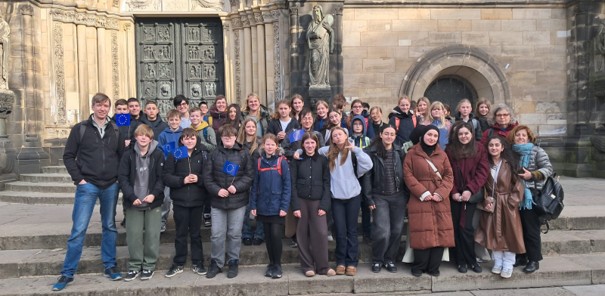
Another highlight of the visit week was that the Oyten Integrated Comprehensive School also took part in the programme on many days. On Thursday, we first visited their school, which has a very special approach. They study all their core subjects in ‘learning offices’, so they can decide for themselves how often they have maths, English and German, and with which teacher. We then travelled together to Bremen to visit the Europapunkt. In a workshop, we explored the significance of inclusion for Europe and were then given the chance to explore Bremen city centre on our own for a while.
We are now looking back together on an eventful week and even met up again on Zoom for a debrief. That made saying goodbye a little easier, but it was still hard for us to say ‘goodbye’. The time we spent together has shown us just how enriching it is to engage with young people from other countries. We’re taking away many new perspectives and the realisation that Europe thrives above all through encounters and mutual understanding.
Welcome to Athens!

Erasmus+ and DGJW exchange with the 3rd Junior High School of Zografou, Athens
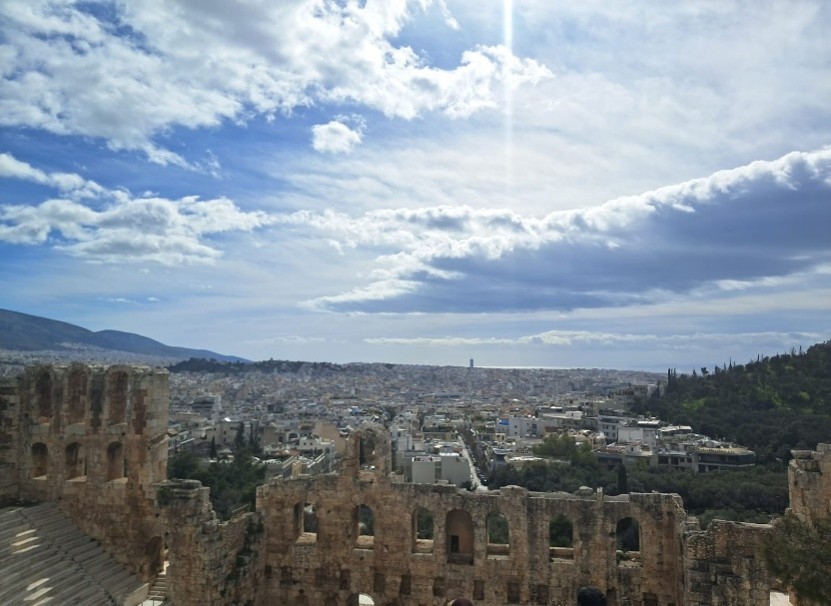
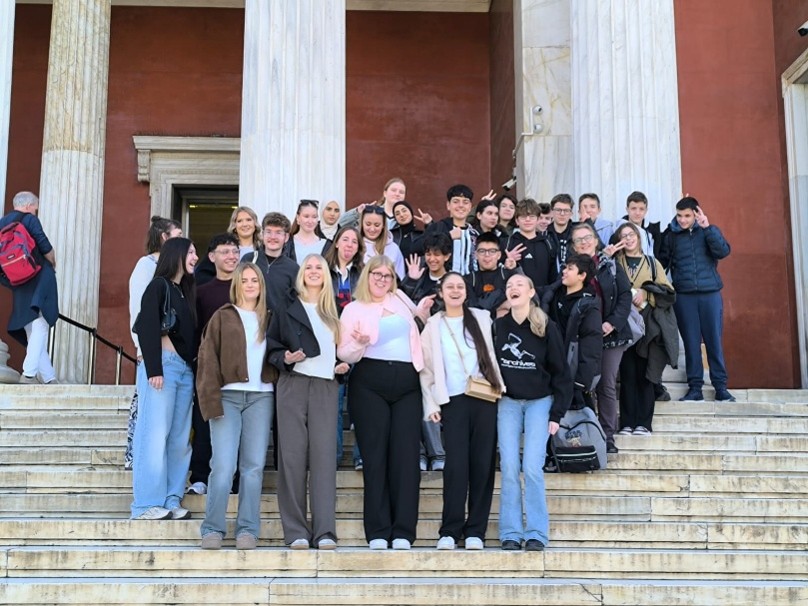
Our Erasmus+ trip to Athens was an exciting and unforgettable experience for us. Together with our advanced art class, we spent a week in February 2026 getting to know Greek culture, history and everyday life first-hand. Right from the very first day, we were struck by the city’s unique atmosphere. During our walk through Plaka and the small neighbourhood of Anafiotika, with its narrow alleyways and white houses, we felt as though we were stepping into another world. The view of the city and the historic buildings was simply breathtaking.

During the week, we visited various museums where we learnt a great deal about Greek myths, art and traditions. We found the workshop at the Children’s Art Museum particularly exciting, as it gave us the chance to get creative ourselves. Following in the footsteps of Pablo Picasso, we created self-portraits. The National Gallery also showed us just how diverse art can be and how history and culture come to life through it. We noticed that the Greek pupils engage very deeply with their culture and look back with great pride on Greece’s long and glorious history.

A real highlight was our visit to the Acropolis and the Acropolis Museum. It was something special to finally see the famous monuments with our own eyes. We could have spent much more time there, because the theoretical basics – which are usually rather dry in lessons – suddenly became much more tangible and impressive to us. At the Museum of Folk Art, we then worked together with Greek school pupils. We chatted in English and learnt more about our different, yet similar, traditions. The Greek pupils speak excellent English; many of them take private tuition after school. They want to work in the tourism sector later on or are considering emigrating from Greece. The economic situation makes life in Athens expensive; in the countryside, it’s even harder.

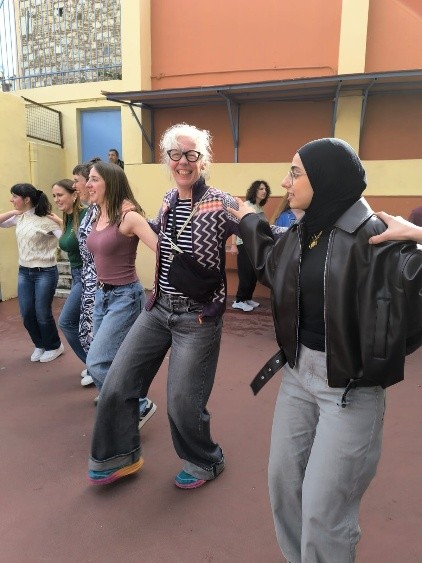
Every day we also visited our host school – sometimes for language activities organised by the German-Greek Youth Organisation (DGJW), and sometimes to take part in the carnival celebrations. On this day, it is customary for pupils and teachers to come to school in fancy dress. We were invited to join in the Greek circle dances and, as always, there was plenty of food. On Friday, we took part in an art lesson and were allowed to try out the indigo printing technique for ourselves. It was interesting to see what everyday school life is like in Greece. We had lots of lovely conversations, some even in German, because many people in Greece choose German as a second foreign language and wanted to practise with us.
As well as the programme, we had time to explore Athens itself, try even more Greek food and enjoy the city together. The trip showed us just how enriching it is to get to know other cultures and meet new people. We’ll certainly remember the many wonderful impressions and experiences from Athens for a long time to come – though we won’t miss the neighbourhood where our hotel was. Nothing happened to us, we were never in any danger, but it felt eerie and sometimes even unpleasant to see so many drug addicts on the streets. We felt sorry for them but couldn’t help. As a tourist, you certainly wouldn’t have seen this side of Athens. We’d like to thank Erasmus+ and the German-Greek Youth Organisation for making the exchange and these wonderful experiences possible through their financial support.

DGJW-sponsored return visit by the school pupils from Athens to Bremerhaven

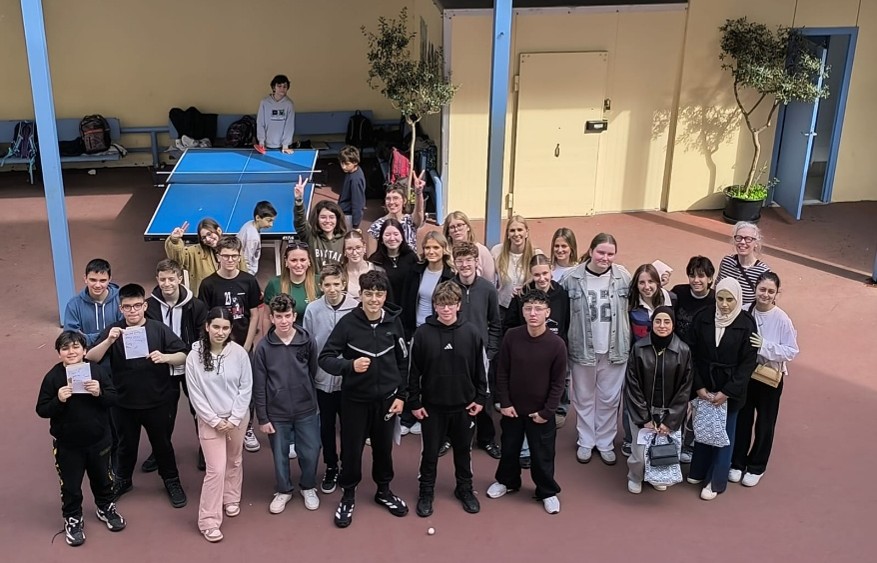
Having completed our Erasmus+ trip to Athens in February 2026, we were delighted to welcome our partner pupils from Athens to Bremerhaven as early as March 2026. Their trip and the programme during their stay were funded by the German-Greek Youth Organisation. We were looking forward to seeing our partner pupils again and showing them our town and what everyday school life is like here. Right from the first evening, the atmosphere was open and familiar again, as if we’d only said goodbye in Athens yesterday. During our joint city tour and the dinner that followed at the Burger Bar, interesting conversations quickly sprang up and we had a good laugh together.
On the second day, we travelled to Bremen together. During a ‘selfie’ city tour, we discovered well-known landmarks such as the Bremen Town Musicians, which were also incorporated into the language activity. At first, we felt a bit embarrassed about meowing and barking, but when the teachers got fully involved, we had no choice but to join in the fun. We don’t actually visit Bremen that often ourselves, so it was lovely to explore the region together. We then showed our guests the Kunsthalle, which we know very well since our exhibition there. We looked at just a few, but really interesting, works of art and, just as we had done in Athens, took part in a workshop together. This time, the task was to depict the Bremen Town Musicians individually and in groups.
We drew our favourite animals using oil pastels and stacked them on top of one another. At first, the task seemed a bit awkward, but when the varied pictures were laid out side by side, it all made sense.
We also particularly enjoyed spending the day together at our school. After the welcome, we worked together in a workshop on the theme of ‘Fairy tales and legends in a modern interpretation’. This gave us the chance to get creative in our art room and learn a lot from one another. We then invited our guests to the canteen and the German Emigration Centre. We’d booked a special workshop for them, after which they were unfortunately not allowed to view the entire exhibition on migration. Nevertheless, we noticed that the themes of openness and mutual understanding had been approached in a completely different way by the pupils. During the digital city scavenger hunt that followed, all the participants seemed pensive and were more interested in the people on the streets than in the sights.

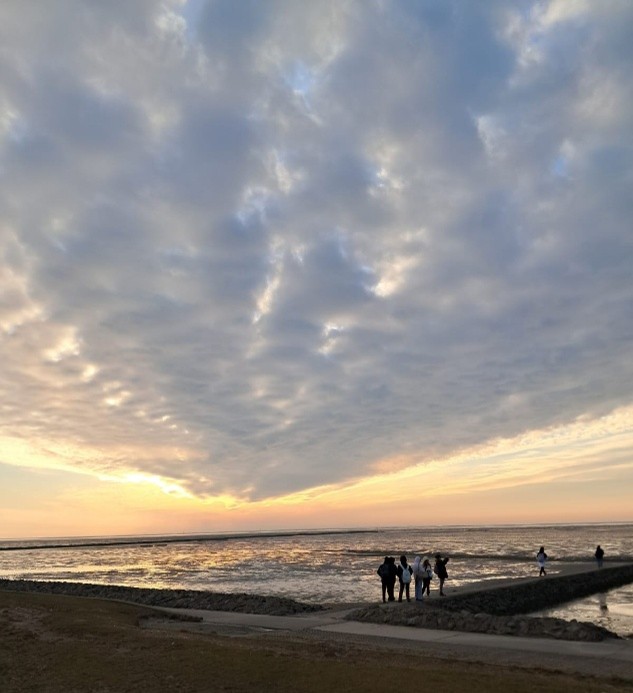
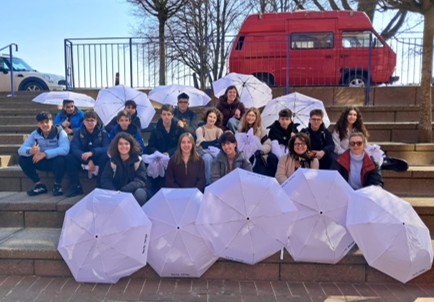
The next day, we made sure all our guests’ wishes were fulfilled. First, at the pupils’ express request, they visited the seaside zoo and were given an in-depth look behind the scenes. Afterwards, as one of the Greek teachers had grown up in Germany, we drove to the North Sea coast and took part in a mudflat walk with Mr Siebs, even though it was actually far too cold for it. For our guests, the Wadden Sea was something completely new, and it was great fun to give them this special experience. Over our farewell dinner together, we looked back on the eventful week and realised: it’s really exciting to see our own home through the eyes of our guests. We said our goodbyes on very friendly terms and surprised the visitors from Athens with a CvO umbrella as a memento of our time together – come rain or shine. It’s a shame we can’t see each other again straight away in April. But we’ll stay in touch!

Our heartfelt thanks go to Erasmus+ and the DGJW, as well as to our teachers from Bremerhaven and Athens, who not only supervised the weeks but, through their preparation and follow-up work, made the financial support – and thus our exchange experience – possible.

LINEup!

19 May 2026. Today’s theme at our school was: LINEup! – No, not queuing at the photocopier just before lessons start – but research with real educational relevance! 🙂
We had the opportunity to take part in the international EU research project “LINEup! Longitudinal Data for Inequalities in Education”. The focus is on how educational success and equal opportunities for children and young people aged between 6 and 18 can be better understood and promoted.

To this end, we conducted interviews with various focus groups: parents, pupils, teachers and school management. So, school from every angle – a multi-perspective approach, so to speak, but without the worksheets! 😉

What’s particularly exciting is that the project started in Germany with the involvement of the Karlsruhe University of Education and has an international scope. So it’s not just about individual impressions of everyday school life, but about big questions: Who has what opportunities? Where do barriers arise? And how can schools become fairer?

For us, it was a great opportunity to be part of a research project that looks precisely where educational equity becomes a reality every day: in the classroom, at home, within school structures – and in the experiences of young people.

Because equal opportunities is not just a nice buzzword for Sunday speeches. It plays a decisive role in determining the paths children and young people can take later in life. And that is why it is worth listening closely!

Find out more about the research project: https://www.lifbi.de/de-de/Start/Forschung/Alle-Projekte/LINEup

“Together for a better future!”

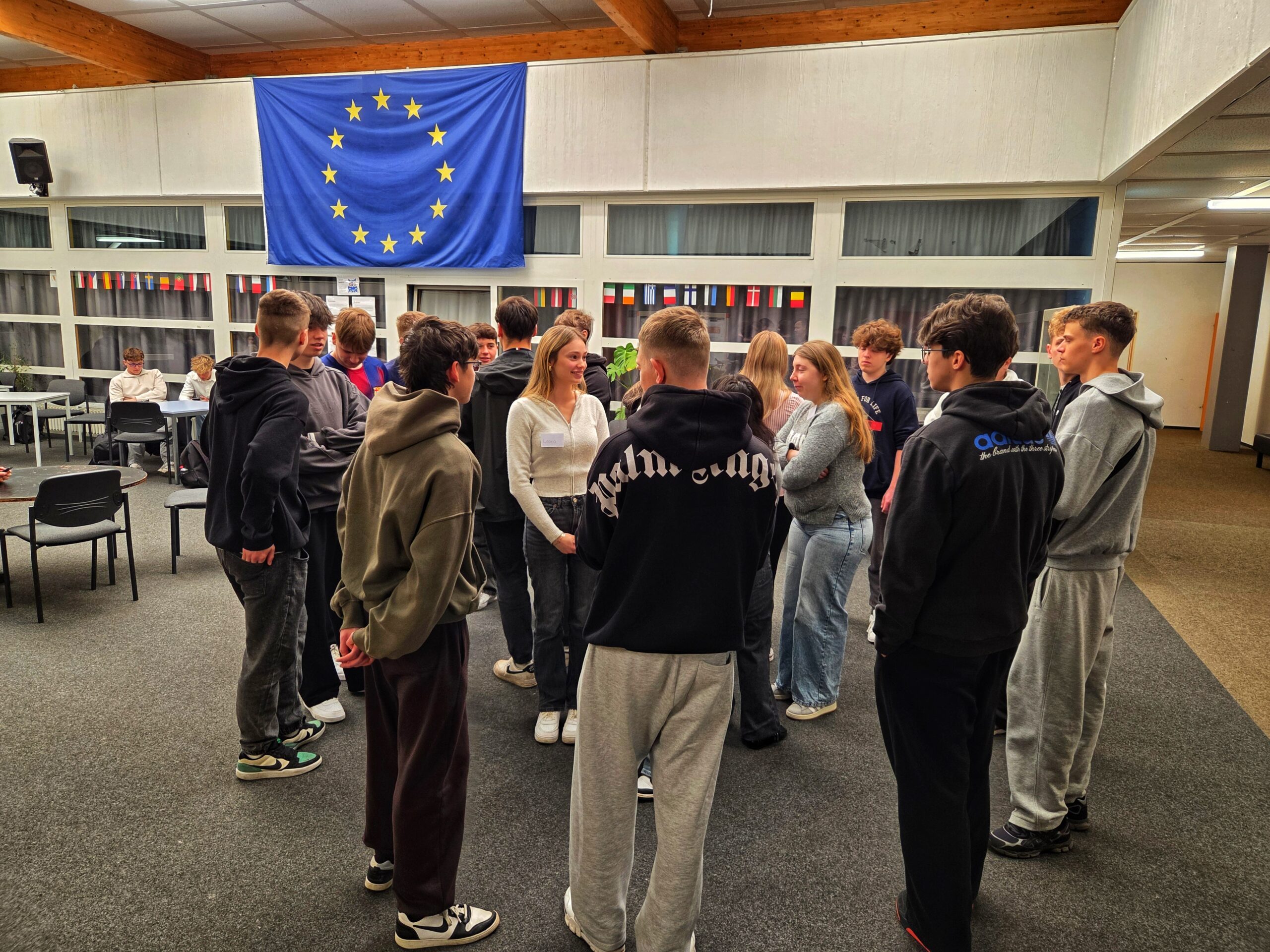
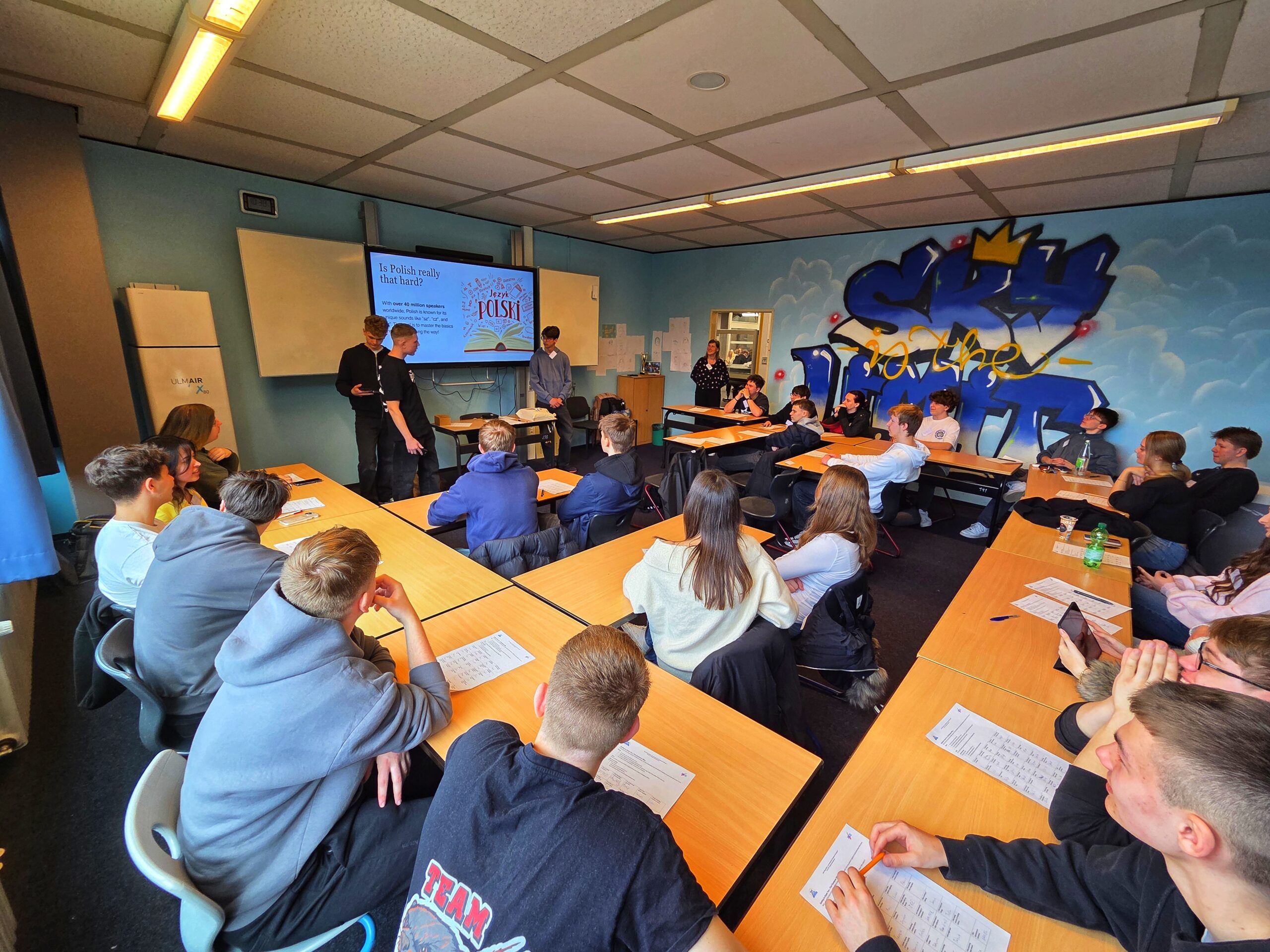
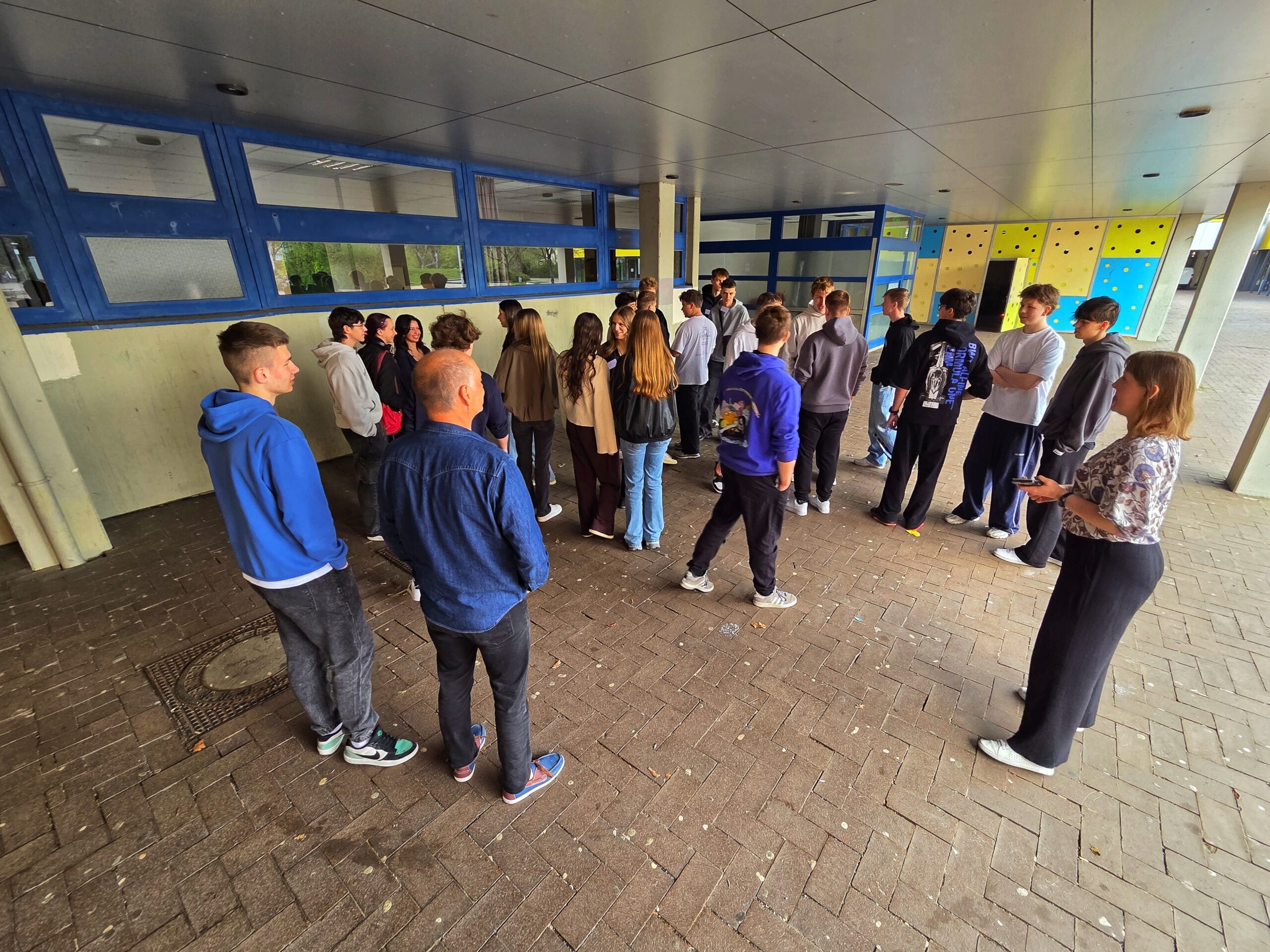
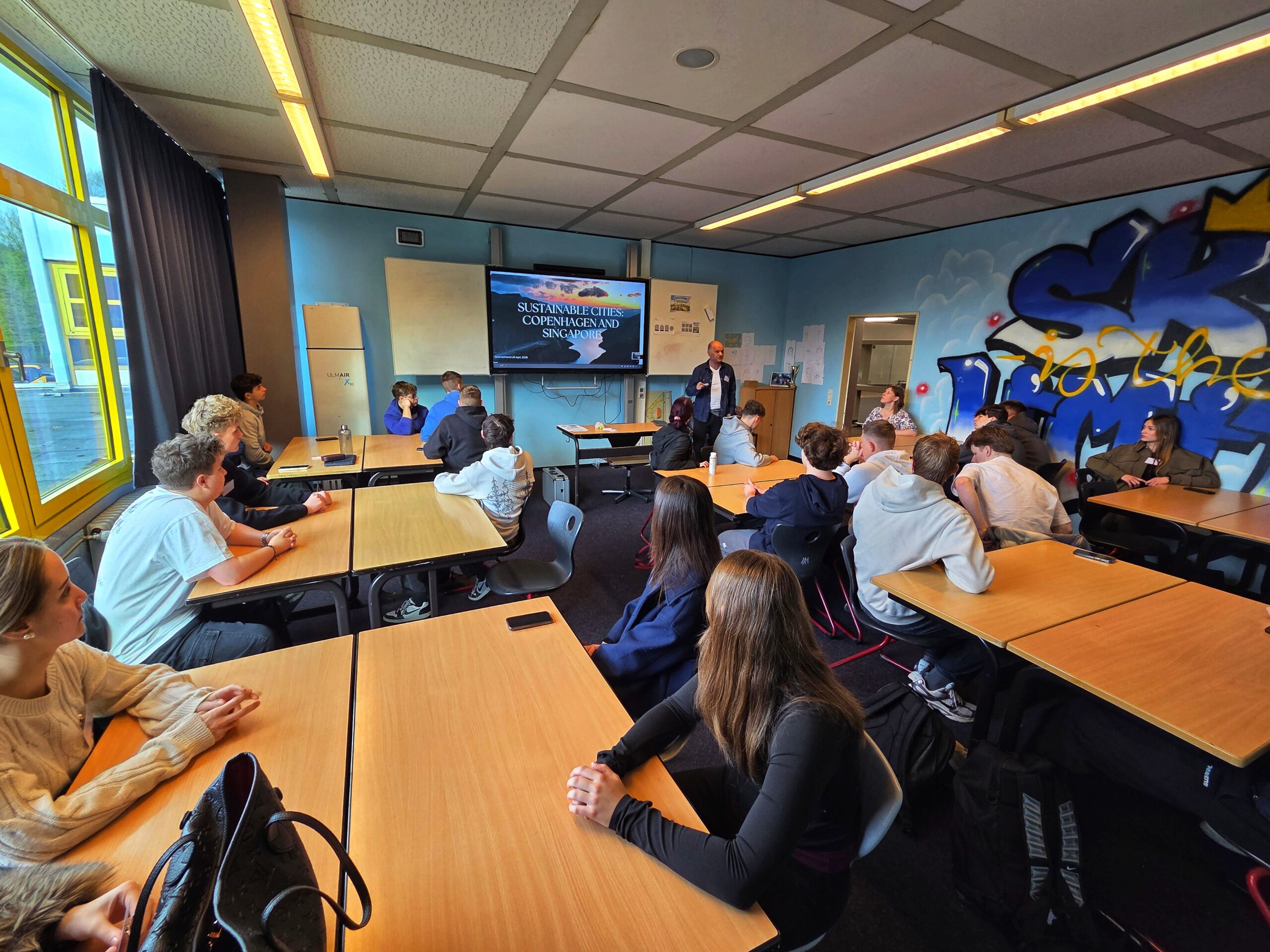
19 April 2026. Last week was all about exchange, teamwork and new perspectives. A group of students from our partner school in Krakow visited us for the joint project week ‘Sustainable Cities & the SDGs: Working Together For A Better Future!’. Whether it was getting to know each other through small talk, exploring the city together or tinkering with sustainable ideas – nothing was done alone here. In international groups, we discussed, laughed, created and presented. From brainstorming about the SDGs to designing our own “City of the Future”: everything came about through collaboration, with lots of exciting discussions and probably just as many different opinions. And by the way: a joint video is taking shape too – memories included. - Conclusion: if learning looks like this, we’d love to have project weeks more often!

¡Hola, Barcelona!

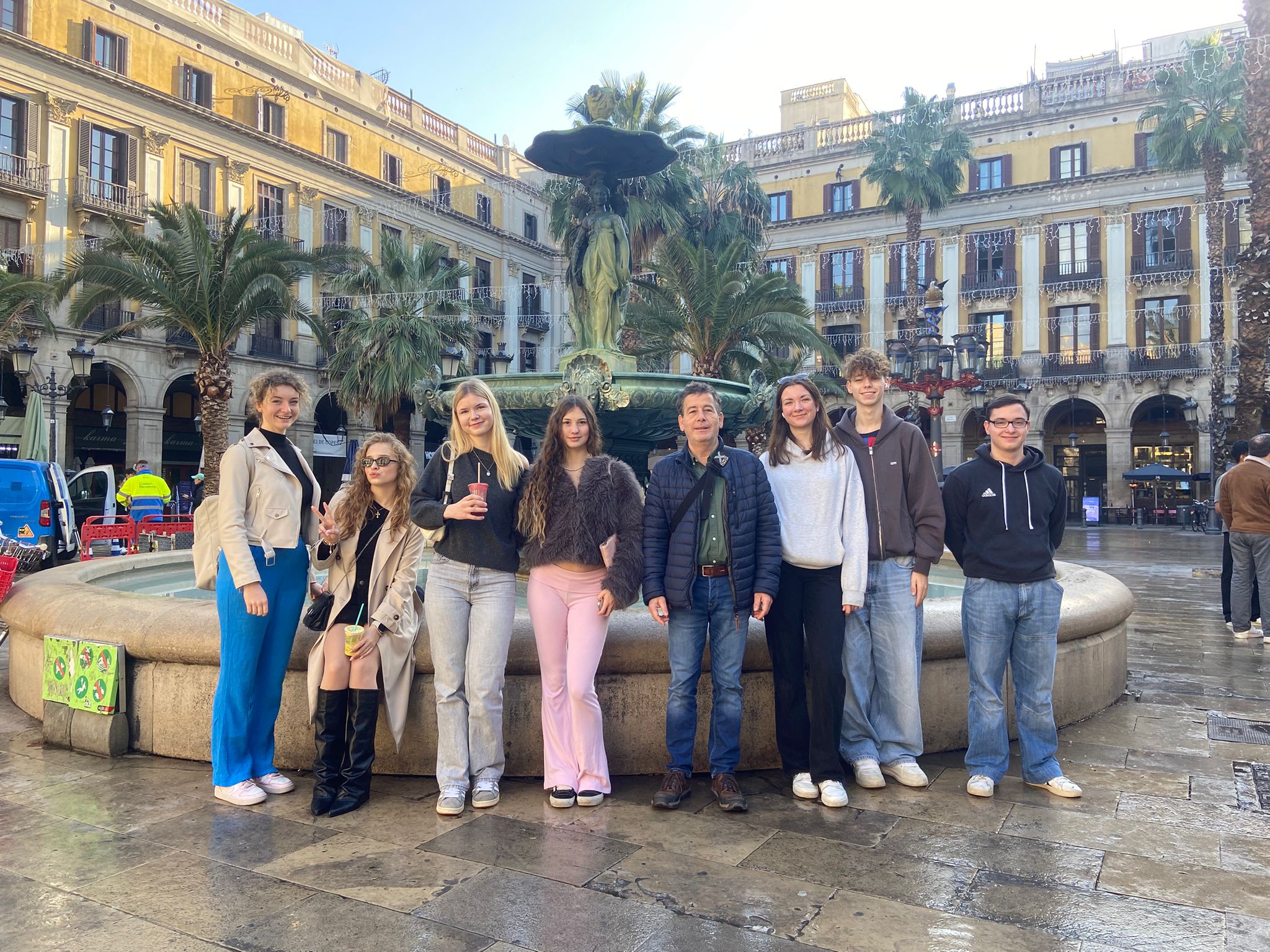
10 February 2026. "In December, I had the opportunity to travel to Barcelona. Even the arrival was exciting, because everything was new and unfamiliar. Despite the long journey, I immediately embraced the city and was curious about the days ahead.

Visiting our exchange school in Santa Coloma de Gramenet was a special experience. There we got to know Spanish and Italian students and gained an interesting insight into everyday school life in Spain. The museum visits, for example to the Archaeological Museum and the Museu Picasso, were also varied and helped me learn more about the history and culture of Barcelona.

For me, the Sagrada Família was an absolute highlight of the trip. I was very impressed by its size, colours and the light inside. The view of the city and the harbour from Montjuïc was just as beautiful. I particularly liked the fact that, in addition to the programme, we also had time to discover Barcelona for ourselves – at markets, on walks through the city or on the beach.

Looking back, the trip to Barcelona was a special and very enjoyable experience for me. I learned a lot of new things, gained many impressions and really enjoyed the time with my course. I'm sure I'll remember this trip for a long time to come."

SVeN 2025

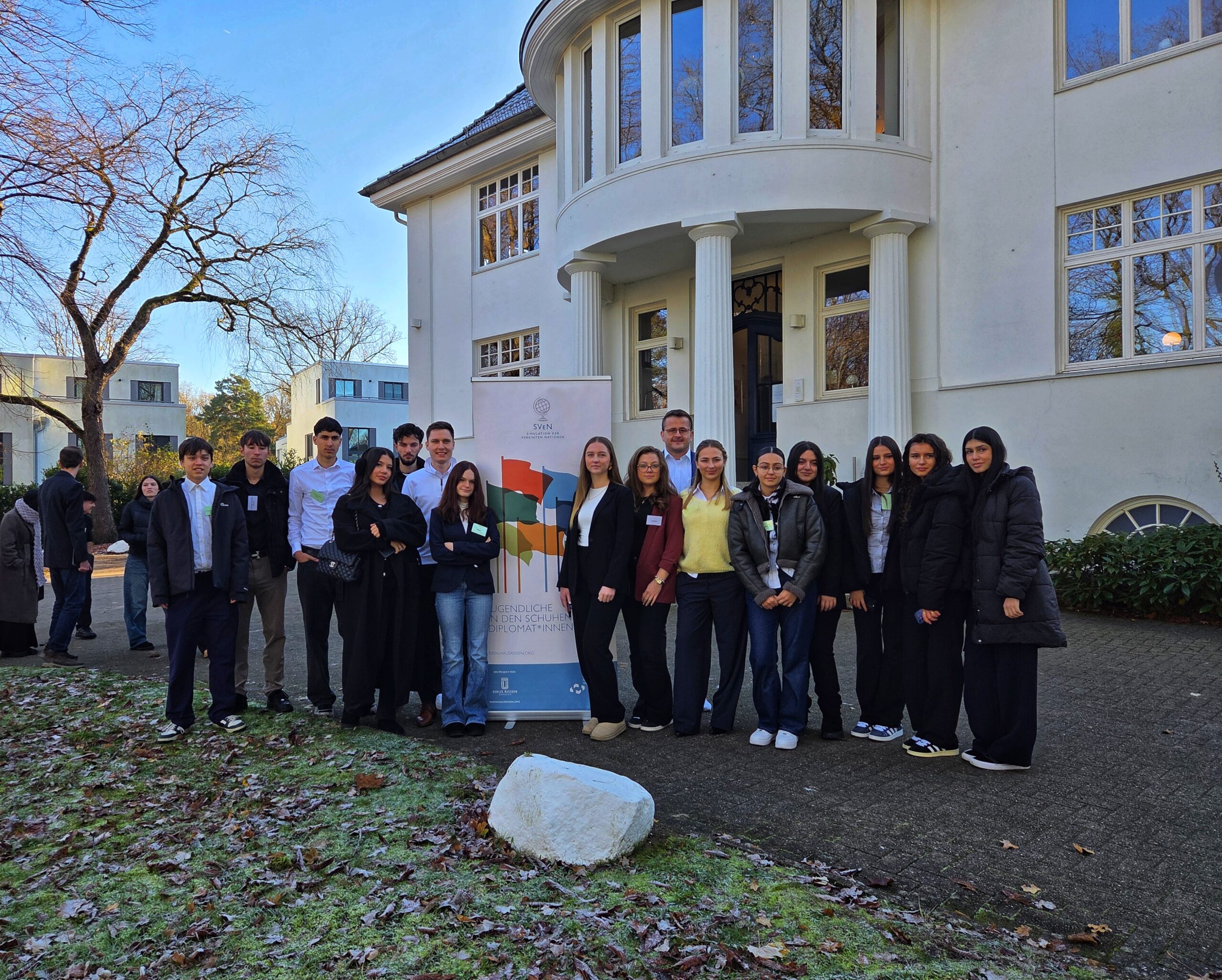
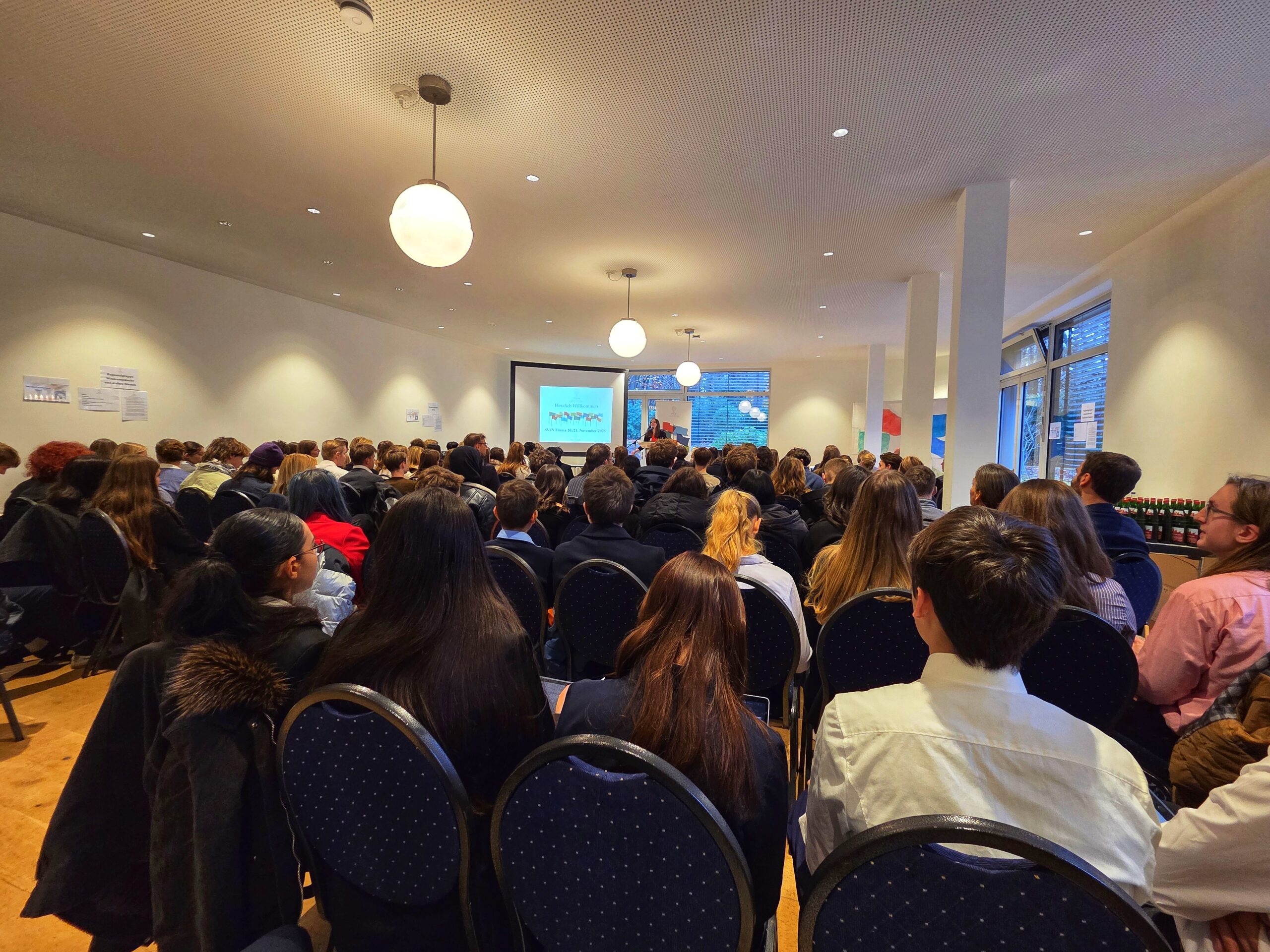
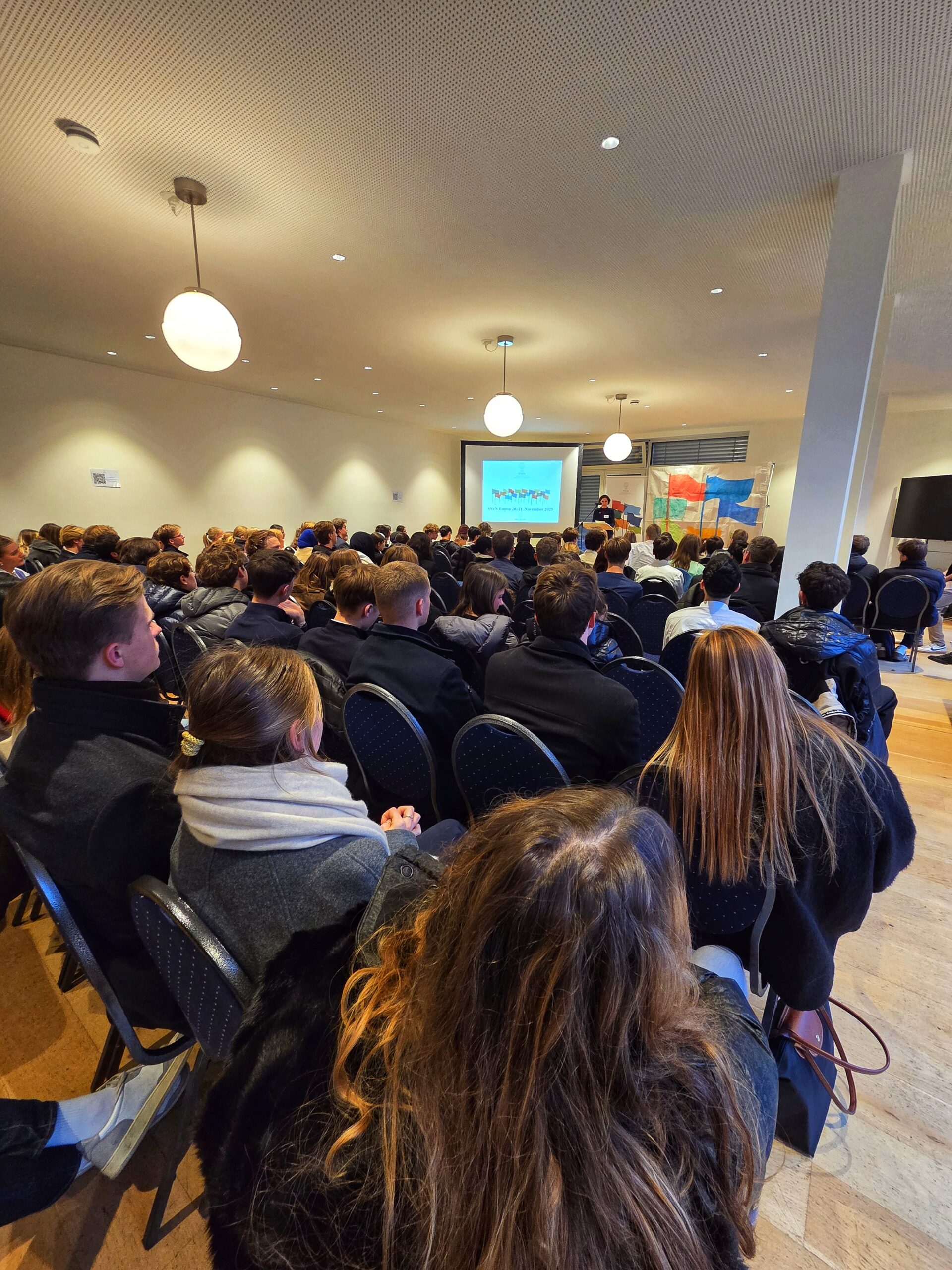
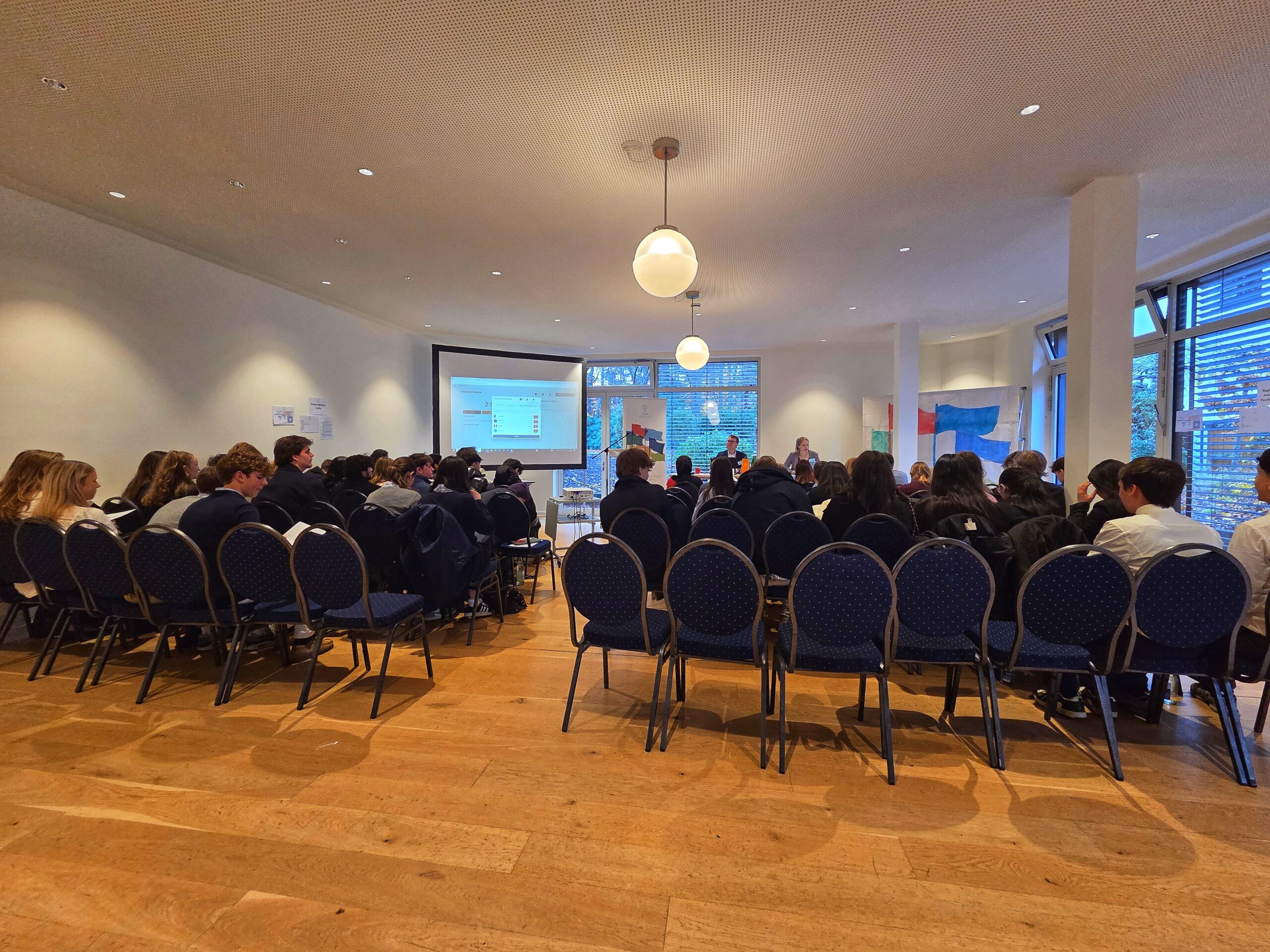
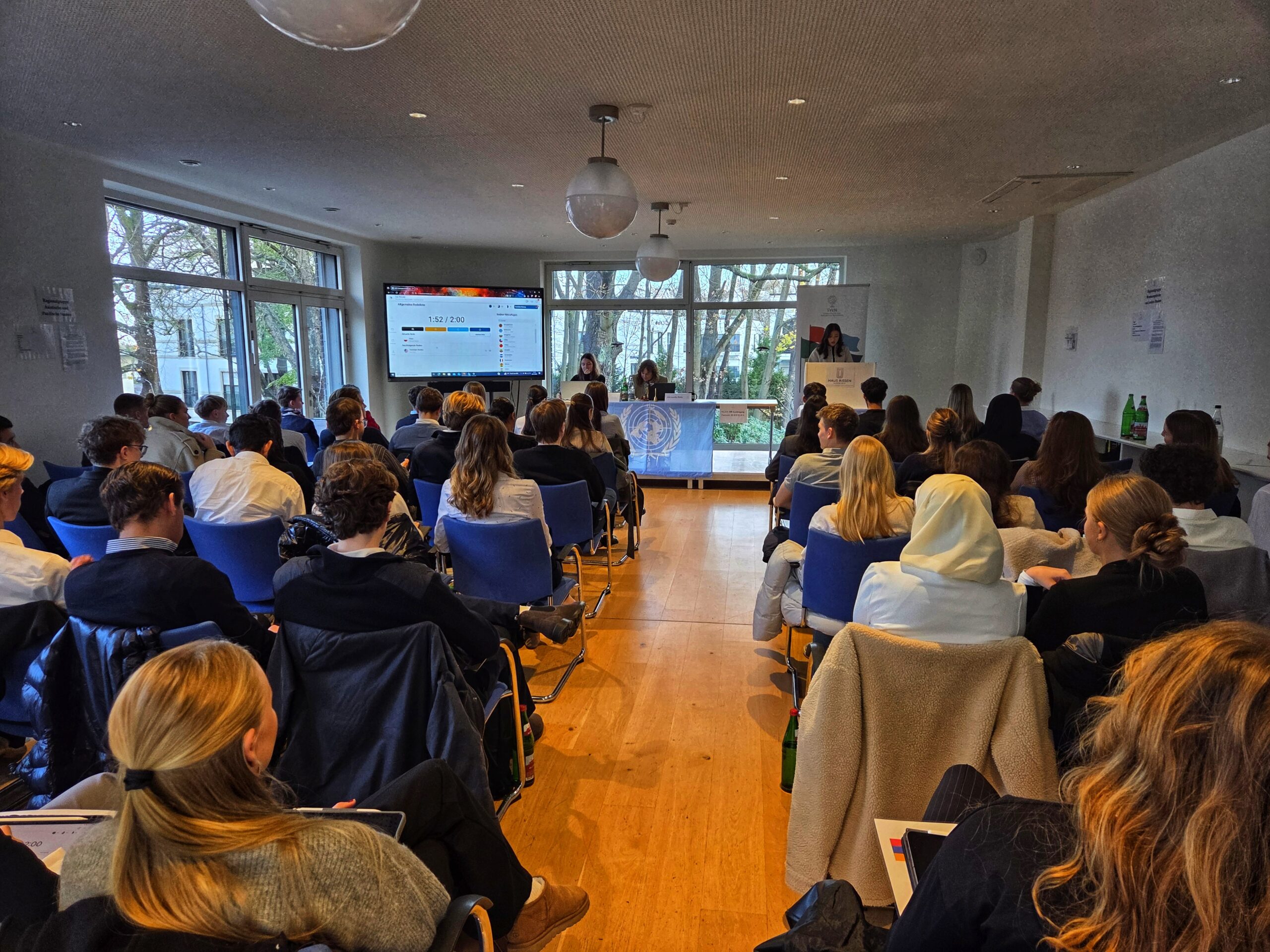
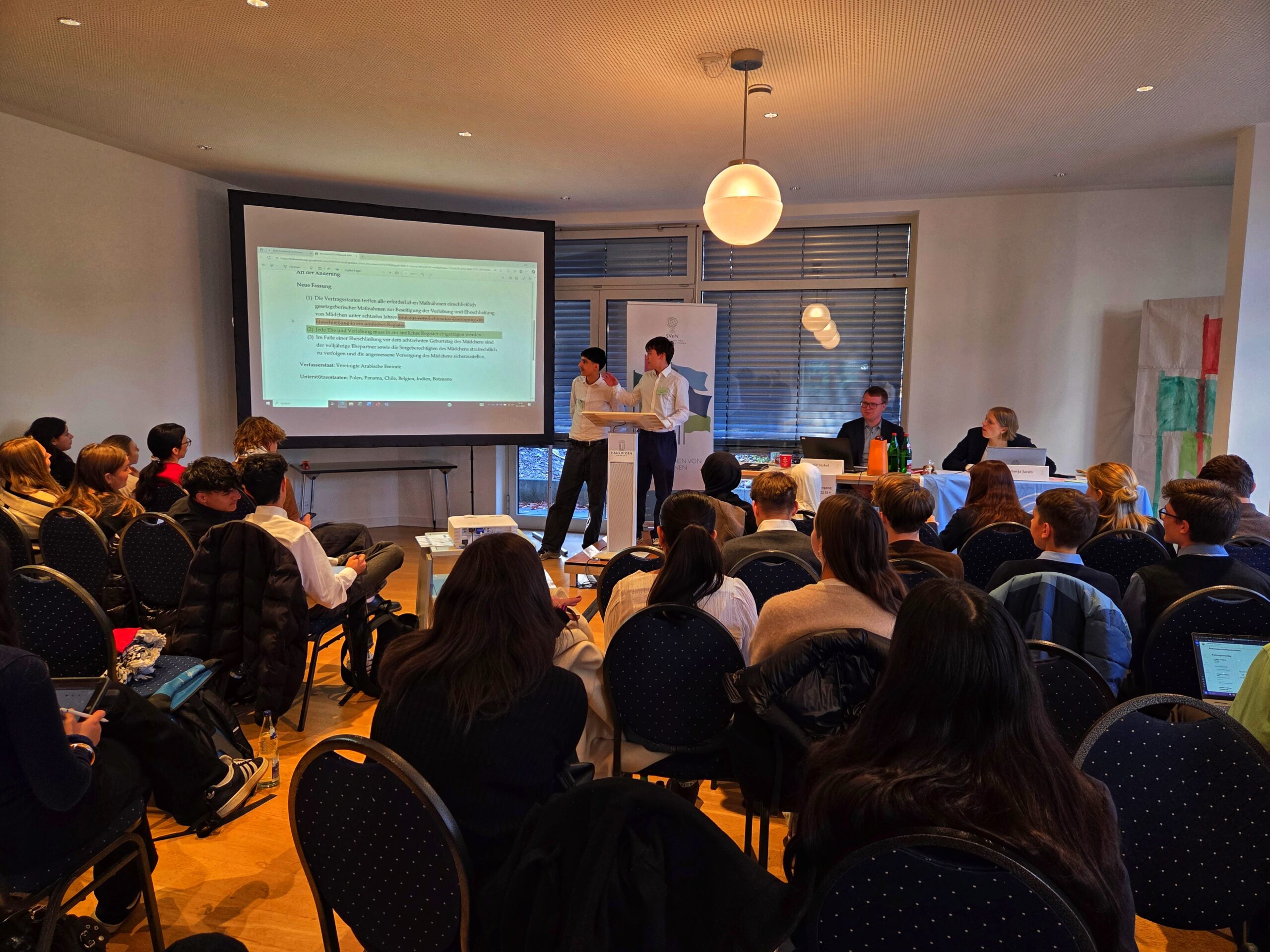
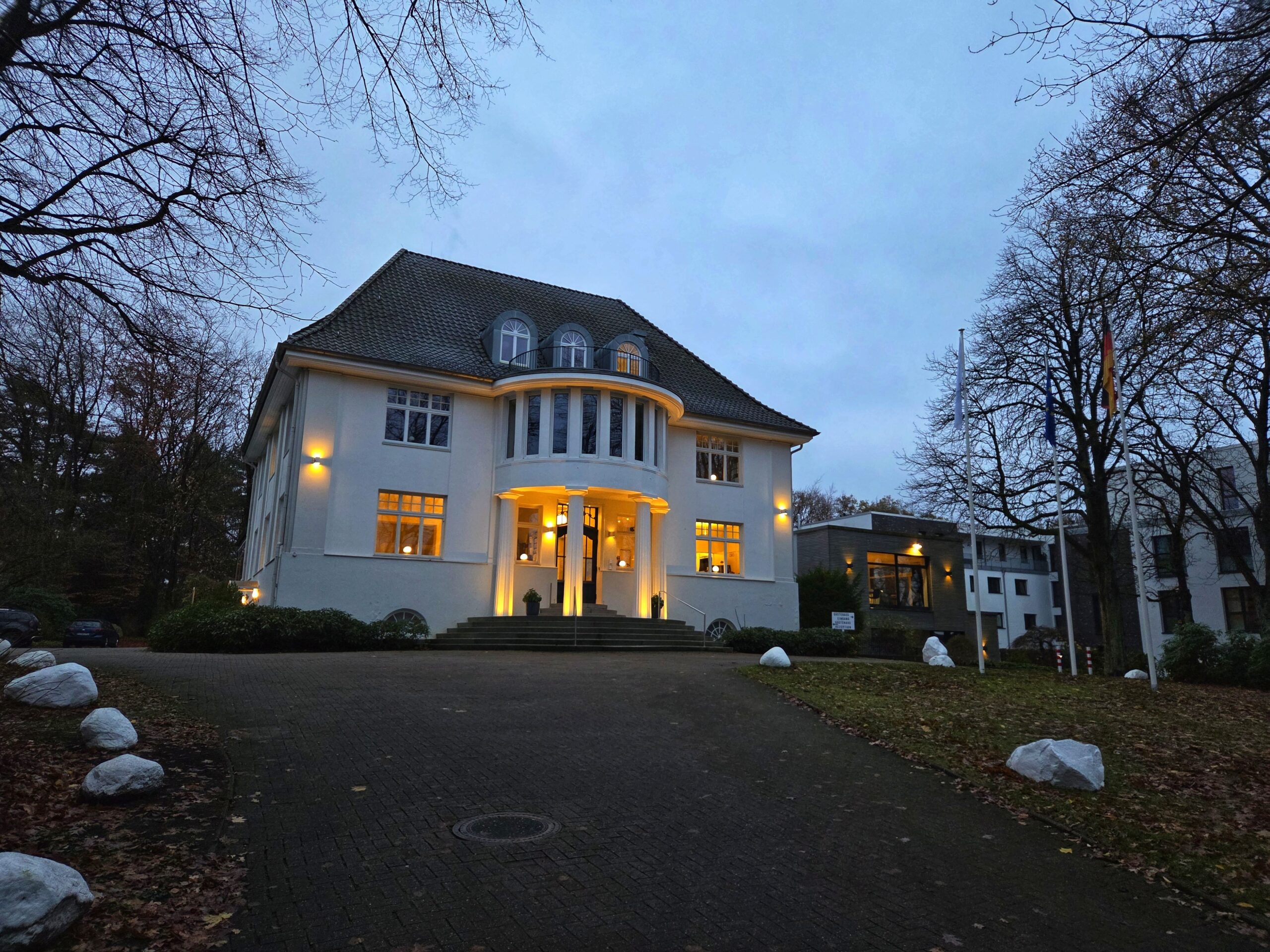
Between crises and compromises – our students at the SVeN at Haus Rissen. On 20 and 21 November, it was that time again: a team of dedicated students from our school, accompanied by our teachers Maximillian von Holten and Michael Schmitt, once again took part in the SVeN – Simulation of the United Nations at Haus Rissen in Hamburg. For many, it was not just a simulation game, but a journey into new political worlds – with heated debates, unexpected alliances and a good dose of emotion.

What exactly is SVeN? SVeN stands for Simulation of the United Nations. It is run by HAUS RISSEN, an independent political education institute in Hamburg. Young people aged 15 and above are invited to take on the roles of UN delegates and simulate real UN bodies – specifically the Human Rights Council and the Economic and Social Council.
The project is financed entirely by donations and third-party funds, so participation is free of charge for the students. SVeN is led by a highly professional team that works with realistic rules of procedure based on the actual rules of procedure of the United Nations.

Preparation and procedure. Our group prepared intensively in the days leading up to the simulation – with position papers, negotiation strategies and speeches. On the simulation days themselves, the delegates negotiated issues relating to children's rights, such as girls' rights and compulsory education – just as they would at real UN conferences.

‘In a very short time, my self-confidence has grown enormously thanks to my role as a delegate.’ – This is how one student aptly summed up her experience.

‘You learn how democracy happens not only in the classroom, but also internationally – it gave me goosebumps.’ – A quote that shows the emotional depth of the simulation.

‘It was incredible to see how our delegations built a coalition – in the end, they had formulated genuine compromises that they could be proud of. For me, SVeN is an absolute highlight of the school year – this kind of learning cannot be replaced by mere lectures.’

The participants are overwhelmingly enthusiastic: engaging with other perspectives, strategic negotiation and creative approaches to complex issues not only promote political knowledge, but also personal development. The above quotes show that SVeN inspires, encourages and challenges!

A look at the big picture. The value of the project is also demonstrated by the external support it receives: SVeN is under the patronage of Katharina Fegebank, the Deputy Mayor of Hamburg. And the political and educational benefits are also enormous: according to the State Agency for Political Education, SVeN strengthens democratic skills such as communication, compromise and self-efficacy.

A rich conclusion – with humour and heart. The simulation is much more than a role-playing game: for our students, it was an emotional rollercoaster ride. Between heated debates about girls' rights, motions, speaking breaks and unexpected alliances, they not only learned to formulate arguments – they learned to listen, build bridges and take responsibility.

And by the way: some of us enjoyed the negotiations so much that they joked, ‘Becoming a diplomat is cool – but please let's not have to pass resolutions all the time!’

For our school community, one thing is certain: SVeN is a great opportunity – and we are already looking forward to the next round!

BSO internship meets Erasmus+!

04.11.2025. More and more students are taking advantage of the opportunity to gain their first professional experience not only in Germany, but also in other European countries. Two students from our upper school completed their BSO internship in Europe during the autumn holidays – and in doing so, they not only got to know new working environments, but also new perspectives, new people and new routines outside their own comfort zone.

These personal accounts impressively demonstrate what mobility within the framework of Erasmus+ can mean for young people: independence, confidence in their own abilities – and the feeling that Europe can really be experienced. We are delighted to be able to share these individual impressions here!

"I did my internship at a primary school in France. My exchange partner had already visited me in February and also went to school with me. Now I was staying with her.

She lives an hour away from Paris, where I went to school with her father. At first, I had some difficulty communicating because I hadn't spoken French for a long time, but by the end of the week it was actually going quite well.

At school, I helped the children with their schoolwork. In French class, it was quite difficult for me to help the children because I lacked some vocabulary and the corresponding grammar. But in maths, English and the other subjects, it worked quite well.

The children were nice and understood that I don't speak French perfectly. Once, I didn't understand a girl, so she tried to explain in English. She only managed a few words, but I thought it was sweet that she tried.

What particularly surprised me was that lessons at the primary school I attended lasted until 4:30 p.m. In return, the children have every Wednesday off school.

When my exchange partner finished school, we sometimes did things together."

"I completed my two-week internship at a tourist office in Cherbourg, France. Most of the time, I helped local people from Cherbourg, but also tourists who had travelled there, and entered their country of origin into a programme.

Most of the time, they asked about possible activities in the city or monuments, but also in other regions in Cotentin. The office had lots of different free brochures in French, English and German, so my German skills were also very helpful. I handed these out on request and mainly helped English- or German-speaking tourists and provided them with information about the city.

I was also able to communicate in French for questions that weren't too specific and had the support of my colleagues when necessary. I was able to learn many new French expressions that you don't learn in class.

I helped sell local products and souvenirs at the cash register, but also restocked the shelves. When I talked to my colleagues, we also came to the conclusion that German tourists always leave the office door open when they come in. To my surprise, this cliché actually turned out to be true.

What I particularly took away from this experience is that work in a tourist office is very seasonal, but nevertheless very varied due to the different wishes of tourists/customers."

"My arrival in Schlierbach was marked by a mild dose of educational realism: I travelled one stop too far and ended up at a neighbouring point on the map. Fortunately, the distance was less than ten kilometres, so a few minutes later I was picked up by car and taken directly to my destination. The community is small, and getting lost there is only possible out of academic curiosity or after venturing too deep into the surrounding forests.

The school day was organised with almost mathematical precision. The start of lessons at 7:54 seemed like a subtle attack on circadian rhythms and the strict 8:00, while the end of lessons at 15:26 revealed a subtle sympathy for structured time chaos. At least the workload is distributed in such a way that no one has to stay until late afternoon; the school closes at 3:30 p.m. The 45-minute lessons were particularly striking: after the hour-and-a-half German blocks, they seemed like short bursts of energy. Nevertheless, the pace of work remained high, and contrary to my expectations, I got used to this unusual rhythm. Particularly noteworthy are the six hours per week dedicated to independent learning.

This concept seemed to be a well-thought-out way of offering pupils of all ages space for relaxation and self-organisation, rather than leaving them to sit around during long breaks. The workshops on offer ranged from chess and meditation to electronics soldering and dog walking. The range of activities was more reminiscent of a university elective fair than a traditional school. The school's infrastructure created an impressive contrast that could easily be included in cultural studies textbooks. The complex consists of two parts: a historic monastery building and a modern new building that almost looks like a carefully polished fragment of the future. The transition between the two areas felt like a brief leap in time between a quiet past and a precisely constructed tomorrow.

Overall, the time in Austria proved to be intense and demanding. Five-minute breaks left little room to catch one's breath, and the architecture of the old school wing made finding the classroom on time a minor navigation test. The placement of classes such as 8B next to 2A defied all intuitive logic. It easily took two minutes to find the right room on the map. The school system combined discipline, room for independence, excellent facilities and a remarkably high proportion of theology, which seemed as unfamiliar to someone without prior experience as political debates do to us."

Visit from Funchal

October 7, 2025. Review – Outlook. Visitors from Funchal – Madeira – Portugal (April 21, 2025 to April 26, 2025)

“Bremerhaven is a fantastic city!” Together with our Erasmus+ guests from Funchal – Madeira, we explore the sights and attractions of Bremerhaven. Of course, the Emigration Center and the Climate House are perceived as inviting destinations, but the tour of the city allows us locals to see the city through different eyes. “The Bürgerpark is a place where you can go jogging safely day and night,” reveals our colleague and sports teacher Cristina, who has run in many places around the world. Her list of countries she has visited is more than 26 lines long.

We take photos in front of the large Bürgermeister-Smidt-Gedächtniskirche. We walk around until our feet hurt and discuss the best shops in the city center. Afterwards, the students go to their host families, who are praised by everyone in the evaluation with gratitude and enthusiasm. Everyone involved is already looking forward to seeing each other again in November 2025, when the students from the three participating schools in Bremerhaven will set off on a return visit to Madeira. These are the CvO Oberschule, the Oberschule Heinrich Heine, and the Europaschule CvO GyO.

We would like to thank our guests for their openness, humor, and appreciation! We would like to thank CvO Oberschule and Heinrich-Heine for giving us an insight into everyday school life while our profile course exams were being held. We would like to thank everyone involved for their fantastic cooperation! We would like to thank our wonderful host families and students for the great activities we did together in the afternoons. The Bremerhaven Zoo and even the Easter Meadow in Bremen were on the program. A thousand thanks for your willingness to think about school again during the Easter holidays and for showing true hospitality.

Welcoming and hosting guests is an inspiring experience – so are you interested in becoming a host? Get in touch with our school's Erasmus+ team (SMT, EHT, HOF)! And be sure to take part in the exchange.

See you in the first week of November in Funchal on Madeira!

“Schule:Global” Network Meeting

September 26, 2025. Yesterday and today, we attended the Schule:Global network meeting in Frankfurt am Main - together with dedicated teachers from all over Germany. The focus was on a question that is becoming increasingly important in times of diversity and globalization: How can we confidently and constructively shape intercultural situations in everyday school life?

Between input on “role, attitude & inner map,” workshops on conflict mediation, multilingualism, and resilience (teachers need this!), and inspiring practical examples such as the “Weltweit-AG” (worldwide working group), the “Kulturpause” (culture break), and scrapbooks, we discussed, laughed, and learned diligently.

Conclusion: Diversity in schools is an opportunity - if we approach it with courage and creativity!

Partner schools visiting!

19.08.2025. Today was a special day: we welcomed two representatives from our partner schools.

Anna Nowakowska from Krakow (Poland) is staying with us for a whole week. As part of a job shadowing program, she is accompanying lessons and getting to know our everyday school life up close.

We also had a visit from Miri Schmidt from our partner school in Schlierbach (Austria) – and she brought some animal support with her: her school dog, who immediately won the hearts of many students.

Encounters like these show how vibrant our school partnerships are. As stated in our joint certificates, they stand for tolerance, human dignity, mutual understanding, and peaceful coexistence in Europe.